Start A Design Studio Using Only Free Software
Show transcript [en]
i'm sorry i'm i'm eavesdropping are you complaining about premiere pro or uh yeah i don't know if i'm complaining or just sort of suggesting it it just might i may not i may not be happy here's a cheat sheet um yeah i've been using premiere for 20 some years yeah on and off and um and i've used final cut pro both the old version in the new version yeah and uh just join us no look um and i've got a lot of strong opinions about all of it yeah like and i'm going to start this we'll talk hey matt are you joining us or uh i'm just wandering around wandering around okay i'm about to begin i was just waiting
for more stragglers to come in but yeah one of the things i was going to talk about today was kdnlive and there's a whole bunch of free and open source video editors yeah that are emerging right now and kdnlive is leading the pack in my opinion of capabilities stability and speed and if you've used premiere pro or resolve you can jump into a program like this pretty quickly it follows all the same metaphors and basic concepts uh but um so yeah that's what i was going to try to delineate today was not just say this is this and this is that that would be a boring list i've got to tell the story behind it yeah
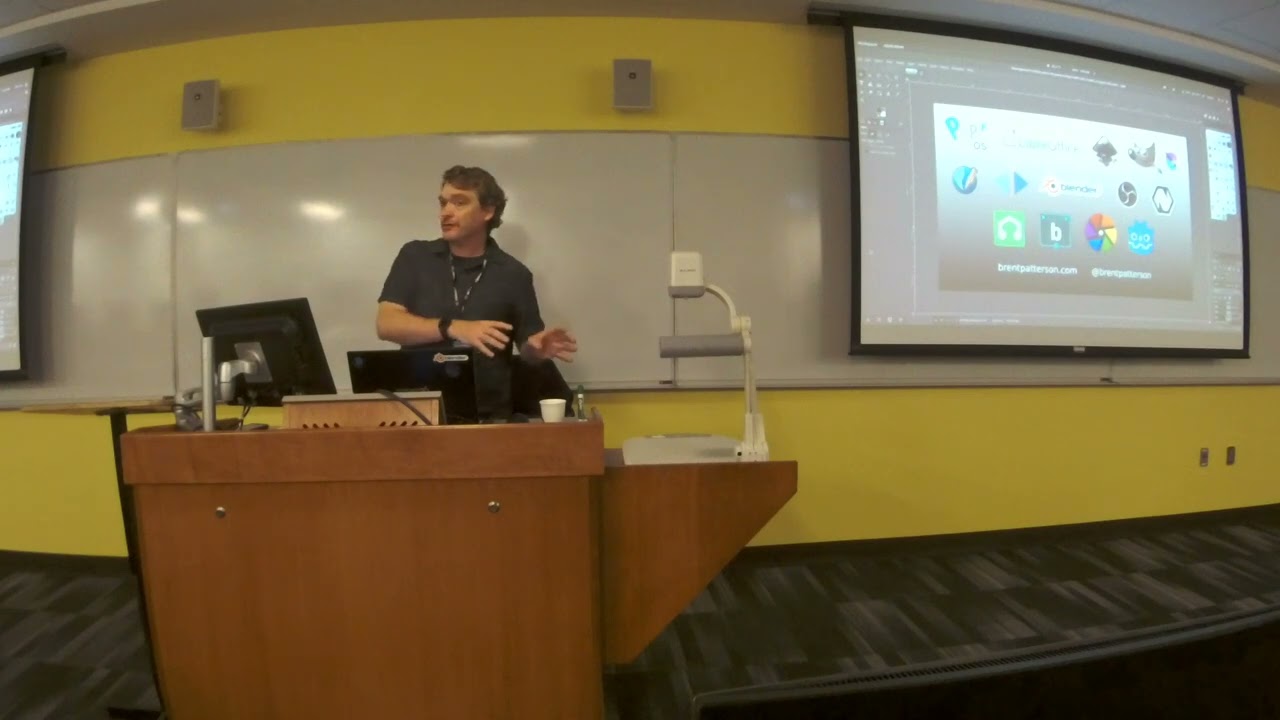
so my name is brent patterson i'm a professor over at buffalo state i've been over there for about nine years and i know a bunch of the professors here at canisius matt is my neighbor the organizer of the b-sides and he asked me to help him with an art track for the b-sides conference and i uh said sure and then the tsunami of life sort of came over from the past six months and i've been trying to recruit people and like most people right now there's a big need for uh just artists and designers and and everybody of any skill and so i ask people to speak and and they say well sure but how much will you pay and i
said nothing and and so most people were willing to speak for nothing but i did get i did get a friend of mine named uh alexander missus who's in germany he's going to speak for us at 10 o'clock and he does some pretty cool stuff i met him in amsterdam a few years ago but i've been a media designer for like 30 years since right out of high school and i have always just i've always been a big tech nerd and i love combining technology with creativity and using that technology wrong for creativity purposes and and it's always gotten me it's always gotten me where i wanted to go which sometimes is i'm not sure where
i'm going to go but if i mix things in in a weird way or in a wrong way then stuff starts to happen uh but i worked at several large media companies in the 90s and early 2000s and i had access to millions of dollars of equipment and uh and and and i learned it all and and i one of my skills uh as a as an artist and a designer was that i could learn software quickly and so i could learn i learned photoshop in the mid-90s and i took some of those basic concepts and metaphors and started learning anticipatory interface design if this software worked a certain way how would another software work another way and i
learned to extrapolate and anticipate and it allowed me to learn software quickly so one of my favorite uh habits or not habits but pastimes is learning new software and and as i sort of see it as almost like a game where i can level up by knowing more software and and and it has helped me a lot because that way i can uh i i can look at any given situation and because i've i've learned so much different software i said oh this one would be the best uh tool for this uh problem at hand and uh so while i worked for a lot of media companies i also really missed college when i graduated so i decided to be a professor
and i went to grad school and what i found in grad school was that access to all that equipment software was very much more limited the colleges couldn't afford all that stuff that i had access to in the media industry and and then when i became a professor i started working for several different small colleges and universities i would request access to lightwave and avid and all these major video editing systems and compositing systems and like there's no money for that and and so i had to do without i had access to the adobe creative suite and my students and i when i was in college too we all pirated all that stuff uh and
and and back in the 90s on a macintosh you could just drop photoshop onto a zip drive and then it would just launch there was no dialing home or anything like that and and uh so so yeah we all did that and uh and then the you know the really expensive software had all the dongles that would prevent you from doing things like that they would have lots of different factors of getting in your way and now i'm sorry i've also got allergies and i didn't bring tissues so i'll be sniffling the whole time but um so anyway it was 2006 and i was working at a small college and uh i wanted to teach 3d animation
because i did 3d studio max in the 90s and early 2000s and couldn't get at least not a legal version for my computer labs and that's when i came across blender and in 2006 blender was very limited uh it was a software that was created in the early 90s by ton rosendahl in the netherlands and my understanding of the history of it was that it was for he created it for a company called not a number which went bankrupt in the mid 90s and the software sort of languished for the late 90s and then they open sourced it in 2001 and over the course of the next 10 years nine years or so it slowly went through
development and made some incremental improvements but then around 2009 more people started picking it up and i've been already using it for a few years and i started teach the the basic concepts of 3d modeling and animation with the early versions of blender starting in 2006 because i thought okay this teaches the basic concepts and metaphors vertices edges keyframes and things like that and whatever students learn from this they could take into more sophisticated software more commercial software and the concepts would work and that proved to be accurate when i saw students doing that but then in 2010 blinders started getting a bunch more money started developing much more rapidly and they started improving their interface
and over the past 12 years blunder has been rapidly improving and how rapidly taking over the industry across the world in north america people tend to be a lot more uh reticent to adopt open free and open source software in a studio pipeline environment but that's not the case with my european friends uh it's being adopted wholesale in every studio and what i'm actually finding is that it's actually being used under the radar by artists and designers all over the world and so one of the reasons for that is you can just it can it's only 300 megabytes you can drop it on any system with any uh of any platform and it just runs you don't have to worry about
licensing issues or anything like that so sometimes when an artist just needs to get something done they find that they can just get it done without having to worry about all the licensing barriers proprietary barriers and so forth that the other software gets in the way they can just go home and work on that software and not have to steal software and and and other issues so i find um a lot of people are using it but they don't say they're using it because sometimes people are afraid to say we're using free and open source software but that's becoming less the case so anyway i started using blender a lot and it became my main tool my main
creative tool and because i found it could do all the things i was interested in doing and but blender isn't just a 3d modeling and animation tool it's also a video editor it's a compositing tool and you could also do a lot of interesting procedural work and so that made me start looking at other software that i i could need because i was always buying apple computers and i was always paying for adobe subscriptions starting in the early uh since they went to the subscription model in the uh about what was that about eight or nine years ago and uh but one thing i noticed is if you stop paying adobe and adobe makes great software i really
enjoy photoshop a lot and i use it still all the time but there's always that onus that or that worry that if you stop paying adobe you lose access to all your files and and i and that troubled me but also i saw my students were still pirating and many of my students because i work at state schools many of my students their own very limited budgets and asking them to buy an expensive apple computer asking them to pay for adobe subscriptions and there was just also some i thought some unfair practices like adobe makes deals with suny and other schools where the professors and teachers get free access to the creative cloud but they won't do it for students
and the school won't buy adobe cloud for the students and there's also constant issues that my students are facing they might have the demo version and then they actually subscribe to things and then the licensing problems just spontaneously emerge and they can't access their work they can't access the software it's just all the software will work but the proprietary aspects of the software is constantly getting in their way it's constantly getting in their way and it's just a big frustration with free and open source software you just drop it on your system it actually uses far less space on your hard drive and it just works um does it work and do everything well perhaps
not as fast perhaps uh not as well sometimes but if you're willing to work with the software and tinker it will and you can get everything done and so that's why i started to think about oh so you could create a full studio like i used to have at large media companies that required a million dollars in hardware and software just to get started you can do that now with a 1500 laptop and free software and maybe even a cheaper laptop than that you could buy an android because most of this stuff will actually run on not an android uh a raspberry pi if you really want to be limited but it'd be really slow i've
tried uh but uh so i thought i would start and i'm going to try to pay attention to the time and interrupt me at any time if you have questions or if you see i'm doing something wrong but my quest to get rid of all proprietary software as much as i can led me to say well what about operating systems so i i went away from apple because apple computers and they're turning back that now but around 2014 or 2015 i realized that their machines were really expensive really pretty but not nearly as powerful as i needed them to be for 3d animation and other tools that and so so uh i started looking for other other
devices so what i found was apple was trying to be more of a fashion company than a creative empowerment company like steve jobs wanted them to be and and i i i certainly understand that fashion is very important to people but when i looked at the power versus costs ratios of apple computers i started trying other devices about like a gaming laptop from alienware it was okay but the battery and everything was horrible and so that led me to a few years ago let's see system 76 and they're a computer maker in colorado and they make laptops desktops and so forth and these machines are pretty affordable and but because of supply chain issues they're they're a lot of
their devices are not available right now but uh what i found was i i ended up buying one of their laptops and that's what i'm i'm presenting on right now this laptop is three years old but it's by far the most powerful laptop i've ever used it still is and uh and one of the great things about system 76 is that they also have service that's comparable to apple service they don't have genius bars everywhere but you can call them and or you can send them a message and they'll respond to you right away they also have lifetime support if you buy one of their devices they don't have a lifetime warranty but they have a
lifetime support so you can email them and and contact them anytime and they'll help you out and they're super nice and they're not um like some technical folks that will uh like belittle you if you're not a linux programmer or something like that but their machines all run their own custom version of linux at their custom distribution of linux called pop os and um so pop os is uh it's a derivative of it's based on ubuntu but that's what i'm running right now is pop os on this system and if you one of the things i always loved about apple computers was the simplicity of the operating system and the consistency of that operating system like i have a
windows computer at home and even though i've got it the interface in dart mode that's only followed for some of the things uh and and that inconsistency even with windows 11 is sometimes a little bit annoying so i really liked you know apple's uh design sensibility uh and and what you'll find with uh pop os and a lot of distributions of linux these days is they follow those same design sensibilities so you know you have a taskbar down here you have an application window for all your applications uh this computer in particular and i'm not getting any sort of kickbacks from uh system 76 for promoting them but i've just had a really good experience with them for the
past three years uh but this uh this machine while it's almost it's over three years old the battery still lasts many hours even though it has a 2070 gpu and uh it has an oled 4k screen so it's beautiful for typography and uh and for most of my graphic design work and and so uh yeah it's a great machine and uh i can run all the yeah i can run all the software that i've come to really enjoy except for adobe software you can't run adobe software and on linux adobe doesn't make linux versions and they refuse to though plenty of other companies make linux versions of their apps it's just adobe refuses to i don't think that's
always going to be the case but what i'm seeing the trends over the past five years is that more and more people are willing to try this other software and it's and it's becoming much more professional much more stable and much more capable and so this trend of most companies like autodesk who makes maya 3ds duty max autocad and so forth they cornered the 3d market they bought up all the 3d software and then to access that software you have to you have to rent the software adobe you have to rent the software and i heard some people call this the vampire economy where you have to pay them every month and for photoshop you might use 10 of the
features but you got to buy or at least rent the whole thing and that's more or less the case for autodesk and the rest of them too and those 10 of the features that i use all the time we're always available here in fact phd students write the software and they discover the algorithms adobe puts a really nice interface on it and puts it in photoshop but now that's becoming available in the free and open source world too and so i can do all my photography i can do all my 3d animation i can do video editing i can do all of that on this linux machine and i don't have to be a computer
scientist i know a lot of you are but i don't have to be a computer scientist i don't have to open the terminal to make things work um and so like like their app store looks like it's very similar to the apple app store um so if i want to look for any of the graphics or anything that i need um so graphic tools and so forth uh in this and sometimes uh the software can be a little bit sometimes it's not perfect but that's certainly true with windows and apple but these are all the uh and you can still install flash if you want but this this is like all the software that's in the category of graphics and
they just you just hit install and it's ready to go and whenever there's an update available or uh a system that then i can just i don't have to go into the terminal to update the system it'll but it doesn't automatically update in the middle of the night when you render it uh so so you get to choose what software uh you update and and it takes care of itself automatically so you can do everything right from the gui you don't have to go to uh the the terminal if that's but you can if you want and so the great thing about it is you can be as technical as you want to be but you don't have to be
and so i think that kind of freedom is really really important apple is moving more and more towards and i see this in my students students and i don't mean to disparage apple so much but they get sometimes they just really get in my way for example students they come to me as freshmen sophomores and so forth they've been growing up in like an apple uh iphone ios environment and when they only work in that environment the the software and the system actively encourages them to not care what's happening underneath the software underneath the screen in fact they never have had to think about and from apple's point of view this is a good thing they've never had to think
about where they're saving their files they've never had to think about things like file extensions or file relationships but if you're going to do anything technical which graphic design and most of the work that we do is they need that and so it it takes longer now to take them into a technical mindset from a consumption mindset and and so by default apple computers and not so much windows but apple computers especially they observate all of that technical side uh for the sake of making it easy to use and whenever i help my mother-in-law with technical issues you know that's probably a good thing but when we want to be culture creators with this tool we need
to be able to think and understand and be willing to think about how that software works and it's not magic it's something that anybody can wrap their head around um but i'll just show you how uh this software works uh so this is the operating system i've got all my different screens here uh different workspaces uh if you plug in another monitor you can extend the monitors really far out it works perfectly with that working in multi-scale resolutions fonts and everything are completely compatible i can like i said i can get all my work done system settings and so forth are really straightforward they're just like apple uh or very similar to apple settings except there's not a system
settings and a control panel there's just system settings here and if you what because it's linux like if i come over to the power section here and i don't want the screen to go i only have these limits here like 15 minutes or never for uh the screen saver or dim the screen and so forth you can just open up the terminal and uh and and there's some simple commands that you can change to do all of that it doesn't destabilize the system there's not a system registry where you'll have to where you can break things but linux is perfectly happy to let you go into a system file and destroy things but but these systems will warn you hey this is
a system file you probably don't want to change that so in other words it's not quite idiot proof but you can deploy them to average people and it'll feel they'll already know how to run it and that's what's really powerful about it so hp has started actually selling computers just a couple weeks ago that are by default running pop os and i see that more companies are going to start doing that as well and a new updates come every day so one another interesting thing about this machine is like i said it's over three years old and it's the only computer i've ever owned that's gotten faster as i've owned it the software keeps getting better
and and so this computer is now twice as fast as it was when i bought it three years ago and i can definitely say from apple experiences that's the inverse of the apple experience it's it's faster now this machine also has had to be perfectly honest this also had a thermal issue and so that's why you see these um these temperature gauges up here i had to throttle the cpu because it was too fast and uh and it's got an i9 in it and they probably shouldn't have put an i9 and a laptop it just gets too hot but as long as i as long as i throttle the cpu it's rock-solid stable right i don't want it to crash during a
presentation but um so have i generated any questions or concerns no okay all right so pop os uh and and it works great with all my office stuff uh and you can even i've got all my microsoft office stuff in here so uh but it runs in a a browser instead of uh the other issues but um uh it it just makes it completely connects to all the wi-fi networks and uh and and yeah so i can stay office organized and get all my work done and and during the pandemic i taught all my classes online using this laptop and and it carried through so it was able to do demos screen grabs or screen
recordings and everything all while running heavy software like blender and so forth but yeah the calendar tools and everything perfectly merged with exchange networks and it just it just works so that's popos and libreoffice and i'm not going to cover everything on this list because that would be that would be pretty boring but i'll just cover some of the things that i do so like libreoffice it works really well it's completely intercompatible with microsoft word uh microsoft excel and so it works just great for all my office needs but you can supplement that with running microsoft office from the browser or google docs which works perfectly well so i do a combination of all of that but
when i want to just write i just come over here to microsoft or rather libreoffice and uh it's got a nice dark interface um it's constantly updating there's a new version of software that that's probably something else i've noticed over the past five or six years of living in an open source world the software speed of it getting updated is increasing a new version of blender comes out every three months and each version introduces a hundred new features and it always gets faster and so that's why i say myself my machine's getting faster is the software just keeps getting better uh but uh typography and everything looks as good as it did on my apple
computer with a retina display and and so because i'm a real stickler for typography because i'm a graphic designer by nature and uh linux looks great and you can put any any type of font on it anything and it works instantly inkscape i don't think i opened inkscape and you can open software the linux way by doing a quick search like inkscape or you can do it the apple way by opening it up from the dock and uh inkscape was a software is a software that you can think of as like illustrator adobe illustrator and it languished in slow development for about 12 years but over the past three or four years they've gotten a lot
of funding and a lot of different grants and blender set the model of how to develop the software how to get grants blender has a budget of over a million dollars a year and they have a only a full-time staff of about 40 people in amsterdam but they have thousands of people that contribute to the software uh and uh and that but it gets channeled through about 40 people uh before it gets approved and then uh and then deployed um but they created a model for funding and software development that all the open source software is using now so it's able to employ people it's able to provide a great product but it's always free and so you feel
and i donate to apple every month just because i use their software and i built a whole sort of career around their software and and so i should but inkscape is a great software for vector graphics and uh the software only takes a few minutes to learn it's intuitive sometimes if my students take an adobe mindset to the software they get a little bit frustrated so we have to talk about that mindfulness of how we're learning software and sometimes the software is written by computer scientists instead of artists so there's some things that make you have to think like a computer scientist object-oriented programming of how objects are related or not but once you can get past that then it's fairly easy
to learn and most of the software these days has really good learning resources so if you go over to inkscape.org not escape logo then you'll find learning resources and pretty quickly uh and uh but also because of the proliferation of people making money off of youtube not a lot of money but you can there's just countless tutorials online uh every problem that you encounter if you and this is a weird thing i've had to learn how to teach students how to google things uh but uh so if you just write curved corners inkscape there'll be uh uh 500 videos on how to do that and so i have to tell my students look at the age
of the video look at the ratings of the video and then click on it and uh can you understand the speaker and so forth but no nine times out of ten every problem that you encounter there's a youtube video on how to solve it and so the resources out there are vast uh when i did this kind of work with proprietary software uh 20 years ago you had a book a manual and if you needed help you might have an email or you might have to call somebody and and so it was really hard to solve technical problems but nowadays if you know how to google things you know how to use youtube you know how to use stack
exchange you can solve most of your technical problems fairly quickly and uh and the cool thing is uh like in and let me jump over to blender um where i had blender open there it is if i find a bug in blender i can usually quickly report a buck and what it does is it automatically well if i'm logged in it'll send them a bug and i can quickly describe what's going on and i find it gets fixed within three days and with most people that i know it was like adobe software autodesk they'll they'll you can you can send a bug report out to them and it just disappears into the void but these guys
respond and they really like it when you send them a bug uh and uh it's it's my experience and there are bugs absolutely but they're fixable and the cool thing is you can download the source code and you can if you know anything about um c or about the software you can fix it yourself or you can contribute and say here's here's a fix so i have friends who actively do that and so what you see is you have this fantastic community built around the software because the software is yours and you're contributing to it so it's it's so you have this this relationship with the software that you can't get with the proprietary software
where it's them and you but with open source software it's us and so it so the students they become more invested in the software and they learn and they can take it home and they can tinker even on their cheaper computers the open source software tends to be able to be it's runnable on older machines my school recently updated our computer labs but they didn't consult me before they did it and they actually downgraded my computer labs and and so they bought a whole bunch of imacs because the notion is graphic designers need imacs and uh and they bought these machines with only eight gigabytes of ram and uh two gigabyte gpus and uh i3 processors
and so they're way below adobe's recommended requirements for uh system minimum requirements and i said who made this decision and so after effects uh and photoshop they run like crap but over the past five years or so what i've i've seen happening is you'll see um students sitting at my computer lab but they're all on their own laptop in front of the school's computer and and they do that for several reasons but i think the best analogy i can make is if you're a music student you have a relationship with your instrument right you want to take that instrument with you everywhere you want to customize it you want to put stickers on it and you can take it home and you can
tinker and so the the free software is sort of like that too it becomes their becomes like their guitar and they become familiar with it in a more intimate way if you will speaking of blender this is blue and um uh so blender is is incredibly powerful the most uh and incredibly stable uh and uh so one of the things that i work on all the time is uh and it's crazy processor intensive uh is these um volumetric nebula and uh and so uh i my son had a tumor about three years ago and uh i went to art school and our school teaches you to overly question your work and so forth and um
when he was going through radiation he's fine right now uh but when he was going through radiation i just wanted an escape so i started just making work that i wanted to see which was goofy nerdy space stuff because i enjoyed and it made me happy and that's really taken off and so if you like go to my website which one is it
i'm now working on a bunch of nebula for planetariums and so i'm able to render all of this right in blender and some of these processes especially if i render them at super high resolution even i have a 30 90 a gpu at home it can take an hour per frame or so but it used to be the interesting thing is that because the software has improved so much it used to be 12 hours and so that speed that and also the the fidelity is improving so rapidly i expect in a year that hour will be a half hour and so forth and so on and so the hardware and the software keep getting faster so the things that
that i could not do before i can down do with free software the fact that i can render these on this laptop uh is not something that was capable just a few years ago and uh so uh but uh i also do like i said um strange experiments and so and so forth um but uh a film studio in london last year contacted me because i had been doing photogrammetry with free software called mushroom oh that's something i forgot to put on the list was mushroom mesh room is um uh meshroom is a tool that allows you it's a uh it allows you to take multiple photos of a room or of any space and
then meshes that together into it it extrapolates that 3d model out of that and it only works with nvidia gpus right now so but it allows you to take any photo it does the photos can come from any camera and you just take a bunch of photos feed it into mushroom and it'll turn it into a mesh complete with textures and everything with the fidelity only based on the quality of the photos how many photos there are the quality quality of the lighting and so i started doing experiments with this but intentionally breaking the software intentionally making things look gnarly and weird and i started posting them to my twitter account and so a film studio called dad bod in london
reached out to me and for four months we worked on a music video for an irish musician and so we took photos here in buffalo we took photos in london we took photos in dublin we put them all together and made a music video uh using that process and it was all built in blender on this computer on this laptop actually because i i have a better machine now but um and so this went on to win a bunch of awards and the the uh the film the artist is called for those i love um but uh and we spent a ton of time dealing with color and lighting then the record company said no this this
musician prefers everything in black and white so we had we had to uh we had to take all the colors [Music] and i rendered it in blender as two render engines render engine is like what visualizes the mesh and one is like a game engine render engine so it's super fast and the other one is a ray tracer so it's fast but it's a little bit slower it's better for uh shadows and so forth this is done with the game engine renderer so the each frame only took a couple seconds to run snakes and so each character and so forth is photographs separately and then we take those meshes and we put it all together into a
separate space this is my nephew on some stairs in my house here in buffalo and then the camera flies through to a field in ireland you tell them and then without blender i make the camera shake a little bit to make it
beside me gaff kicking through the leaves and the grass until two guarded ruffled back hands and hand that means you're crying for your mouths and this is not dramatics this is no tails and ladies classics you stage a whole life being brave
it's built like a a game engine visualizer yeah um but it's becoming more and more robust it originally was meant to be like a scratch renderer for uh tests so you can quickly see uh things but it's become much more robust than that and so it's it's it's nearly professional quality it's still limited uh for example um you can't have like reflective materials with volumes whereas i can do that in cycles like in cycles here um i can i have this mirrored object where's the camera i can have this mirrored object that reflects the volumes in this scene but i don't want to get too technical because that'll scare people away but um uh eevee can't do that uh it can't you
can't it can reflect everything but it can't reflect the volume but that doesn't mean it won't later uh and as the gpus keep getting more powerful and as the as the software keeps getting more clever more features get added every single like like i said every three months a whole bunch of new features come out so it's incredibly powerful and if you're working in a coffee shop and you've got like these node systems going on here then i feel like you can tell people you're working for nasa but the software takes a little while to learn but it's not as complicated as most people think i can have students creating interesting things in about 10 weeks of intense study
and what i love about this node-based programming system is it prepares students for a lot of other software because each of these objects here you can think of as a function because that's exactly what they are and you feed signals from one area to another and so these are noise patterns here noise signals and i have these noise signals feeding into each other to create an interference pattern and that's what's generating these cloud patterns and uh and it does it in a this used to be impossible to do uh in in any realistic amount of time it used to take super computers but now it's fully capable of doing that and technically it's just a sphere with
a cube in there and the sphere has a volumetric cloud but that's what i've been working on uh and so yeah and so i've been also uh making these nebulous sort of patterns uh uh for uh planetariums we have a new planetarium above state and so uh we're rendering these planetary nebulas that we can sell to other planetariums and we're using only free and open source software i'm not interested in people not being able to make a living out of this but i am interested in letting people who don't have access to immense capital be able to create content that they wouldn't be able to be to do before like i said the whole point of this talk is
that you can create a design studio with a minimal investment a thousand bucks or so and the fact that you don't even need an office anymore you just need an internet connection means that we're going to see a proliferation of content from the people who are willing to play around with this so one of the things i've encountered and i've had to struggle against is um
uh established faculty and artists who say well that's and i have to i have this problem with it people too there's a specific thing whenever i ask the software to be installed on a computer lab there's a specific question is this industry standard and uh i say yes but it might not be right now but it will be it will be and this definitely is becoming um industry standard uh there are several films uh on netflix already that have been produced entirely with blender i know what's it called maya and the three i think is what it was called um that was entirely produced with blender as well as next-gen and so forth there was a company in toronto called tangent
animation and they recently disbanded but they worked entirely with blender and created a whole pipeline studio around them but the the industry is is still that it they get a big project and they can hire hundreds of people but then if the whole company is based around one project once that project is gone that's the visual effects industry it comes and goes so my my friends in europe they tend to work more as independent contractors moving from project to project based on who they know and that's what i try to prepare my students for is not working for a company but working for themselves creating a niche of visual styles and unique ideas that they can bring to
whatever project that kind of idea is needed and and so this kind of software better fits into that model rather than the large studio production company and and so that's a trend that i think is going to continue as independent contractors when we can i don't want to get political but when we can not tie having health insurance to a job then it's going to free a lot of people to pursue their own career interest a lot more freely i think um most people agree with me when i say that but there's always the staunch no we should have we shouldn't have insurance unless we have a job uh which um my website is running wordpress by
the way which is um a free and open source content management system and i've been using and teaching wordpress in my web design courses for uh about 13 years but wordpress is 19 years old now and i have had a love hate relationship with it because it's it's always been a bit weird but 2022 there's a new version of wordpress that came out and it is super powerful super easy you can actually create a really robust customized website without having to know any code and it's very drag and drop and uh so my my students in my web design one class we i teach them how to i teach them all the basics of html and css
and the basics of jquery and javascript concepts but then the new version of wordpress came out which says you don't need to do any of that because it's all built on blocks you can just drag and drop your layout however you want build templates so the concept was a bit hard this past year learning that but new students will love it and uh but you can still get into the code if you want and that's the important thing here is on the surface it's super easy but there's a door there that says technical side and it's not locked you can go there you can customize it however you want and so that's really really powerful
and so you can go over to see art design buffalo state if i go to my students graphic design and go to the student websites all these students i update this list periodically but let's see here all of these students build their sites completely with wordpress and i i and they do almost all their work now with free and open source software and so going back to that what i was saying about um industry standard that got me thinking about three or four years ago about how software is actually marketed and that got me into a talk called don't go pro and i went to amsterdam at the annual blender conference to do that talk called don't
go pro and i noticed that all this software like premiere pro final cut pro there's all this software out there that has the pro as a suffix to its name and what they're doing is and it is they're telling you this software is for professionals right this software but they go further than that this software makes you a professional right if you own this software you're now a professional that's the implica implication and it's it that's they're not emphatically saying that but that's what they're saying this software is a professional if it doesn't have pro you're not a professional and and and i think it dilutes what it actually means to be a professional and it's a subconscious sort of thing
and i've done enough marketing to know they're doing that on purpose right like when they when when you have a truck and you and you and you put glass on the trucks you can see other people but they can't see you you're you have power over them right there's there's there's a message there but also trucks like they're huge now why but so so i gave this talk in amsterdam and uh uh about let's talk about what this actually means and and how um what it actually means to be a professional versus just having pro tools there's actually you know audio engineering software called pro tools um and uh so what what what what it actually in it
causes this uh have or used to anyway it's not so much the case anymore swarms of students who think in my classroom that the goal of becoming an artist and designer or creative culture creator in general is to learn software because if i learn the software then i'm a pro and it takes the onus of actually creating the content away from creating the content because they think all right i know premiere but what are you going to say what are you going to do with it right and what are other people doing what has been done and what can you do when you take the onus away from the software of learning the software and
put it on the storytelling and the messages the images and the relationships that you're trying to convey then that puts the learning back at the core of where it should be so what i started learning was that by teaching with free and open source software my students work was getting better not because the software was more capable because it put the emphasis on the message the content and the stories that they were telling and not on learning the software i told them this software might not be usable in 10 years but that's very much true with adobe software too it comes and goes in 2006 i had colleagues telling me well you can only teach software
that's the industry standard and that in 2006 if you wanted to do desktop publishing that was quarkxpress and if you've never heard of it that's because it's not the standard ending part and if you put all your emphasis on learning software at the educational level you're missing the point it should be about learning how to learn software and then what to do with it that makes any sense right okay so um other software darktable is is a is a great tool uh for photo editing uh so so it's it's similar to lightroom by adobe and um so you've probably probably seen me using uh is great for uh graphic design it's a great graphic design tool for layout and raster images
inkscape is a great tool for illustrator so and photo and rather can open photoshop files even the newest versions of photoshop and it can export photoshop files so when someone sends me a psd i can just open it up right here and for the most part it works what you don't get with that you get with photoshop is the artificial intelligence stuff that they've integrated into on photoshop auto selections um content aware scaling but it's coming it's just a little bit slower to get there but it's coming but those are features that i rarely use except for the the select subject that's something that's pretty useful in photoshop but it'll come here as well many of you probably if you're a gamer
know obs which is open broadcaster system great for screen screen grabs screen broadcasting and so forth it works really well natron i've met several the programmers for natron that's an industry it's a sort of a clone of the industry standard uh compositing tool that's used in in the film industry which is called nuke nuke uh is it's really sophisticated natron i i know from somebody that it was sort of a reverse engineered version they wrote the software but by studying the software of nuke uh and and so basically you can do some pretty advanced compositing uh if you're into music creation lmms is uh is a great tool for creating uh just it's a digital audio workstation
and uh let's see here from template let's do club mix and so you can quickly put together let's just put some random beats here and i don't know anything about music but if i need it if i need uh if i need to create any music or anything it has all these different synthesizers and so forth it's really good at that and and even if i don't know what i'm doing i can make something that people say he must know what he's doing and and it works quite well and so that's that's that's pretty exciting um and in terms of game engines godot isn't anywhere capable of the of the intense verisimilitude the intense realism of unreal
or um unity 3d but it is capable of quite a lot and it's completely free and open source and all the software that's on this list is also available for windows and and apple computers for the most part um but usually it's written for linux first and so um if you need uh so but you can export directly from godot um any india for any platform android ios and uh uh also the game system or uh you can also export to have games run uh through html5 canvas so that way it'll run in the web browser so we always need more volunteers um it's really quite capable and um and uh it runs in uh
it runs uh the default scripting language is a python derivative uh but you can also run a c version of it so it's really quite capable um and i won't get into bespoke smith synth but uh it's just it's just kind of cool music creation software so my students have this full robust suite of tools and i tend to base blender at the core of it uh also one other thing here let's go to katie and live so yeah kdnlive is great for video editing uh and uh it's it's fast uh and it's fully capable and so this is just like a showcase video i made my students work last year [Music] but i i use free and open source for
almost everything i do and uh so yeah that's i i know we're running out of time here so uh but what are your questions yes um is there like a better alternative from indesign because that's one of the few ones that like has dating lock-in because like i have cs6 on my computer my clients use the cloud indesign it's the most irritating thing on the planet indesign has become the standard and uh and it is great software it really is there's not a free and open source version that is as easy to use and as capable as indesign yet okay now inkscape and the new version that just came out a couple weeks ago they introduced multi-page
editing so you can have templates and everything just like you can in indesign but the software that tries to be the open source desktop publisher alternative is scribus and it is quite capable and i i've sent many works uh from scribus directly to uh printers and it works just fine um it's just it's not as user friendly as the name but it is fully capable and it runs on windows mac and linux on linux it's my only option for full desktop polishing but i can i can do a full pre-flight uh pdf cmyk separations and everything and it works just fine so and it is it's not developing as quickly as other software but it is
developing and they've got new versions that are coming out now and they work just fine so i would recommend it but with any of this software i always have the caveat give yourself a little bit extra time to learn but there are plenty of resources now especially demo videos of how to make this work one of my goals this summer is to start making more demo videos to get people started but one of the things that i've had a lot of pushback against is elder faculty who uh are afraid of the software because they think it's not industry standard um but what i have found is that like like i had a student named andrea
and she was really good at blender and she got a job at a big design studio and i talked to her a few months after she got the job yeah they only use cinema 4d which is another 3d animating tool it's good software i really like it i like it a lot better than blender i said great great i want to see the work that you do i talked to her a couple years later and she said i converted the whole studio to blender and so i definitely think that's the trend of things that uh uh things to come thanks for uh thanks for listening to my talk thanks for the talk that is awesome
Related talks
 45:22
45:22 50:07
50:07 53:45
53:45 50:55
50:55 52:57
52:57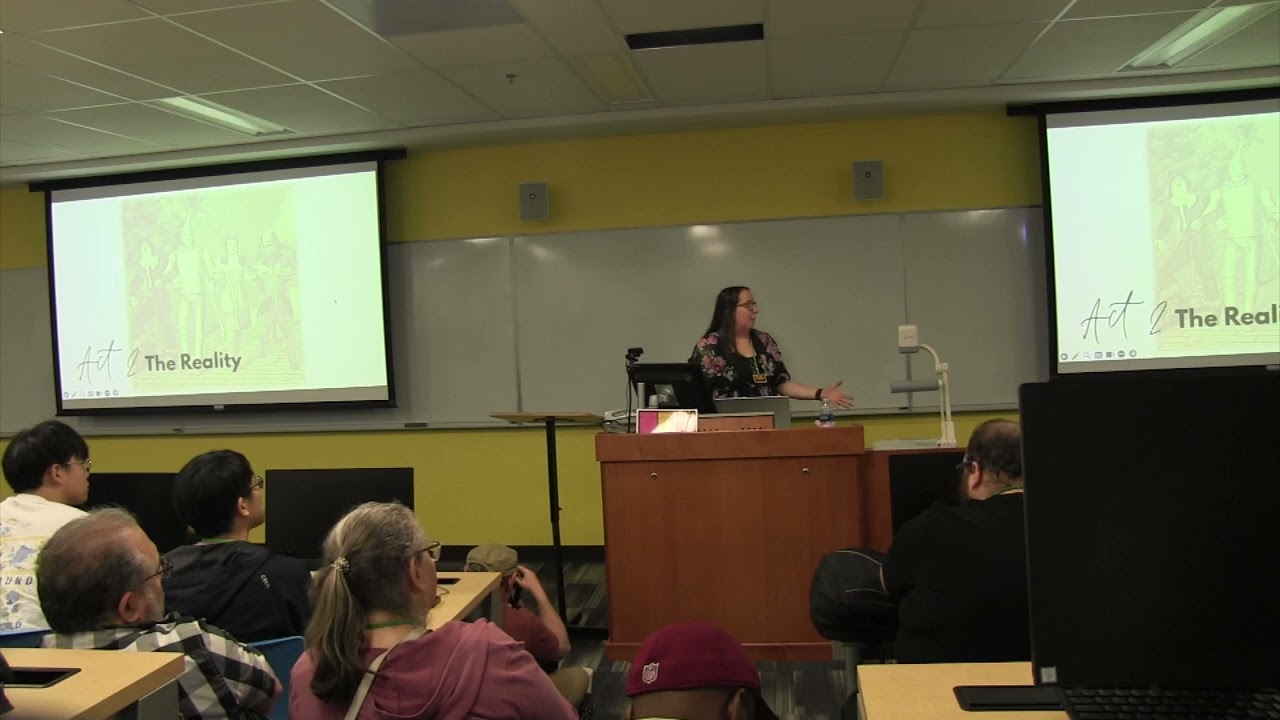 42:26
42:26