The Future of Computer Security
Show original YouTube description
Show transcript [en]
uh without any further ado kevin sheckleton i'm bringing it over to you my man round of applause
good afternoon everyone it's a privilege to be in this room full of practitioners of implementing security in the automatic computing machines so several years ago i was at a talk at a conference where i saw brett victor talk about the future of programming and his talk inspired me to think what would the future of computer security look like so what i'd like to do today is take a step back and look at all the research and the activities that have occurred in our nascent field of computer security because we do best when we take that step back learn it what's learned what has been done before reassess our current situation and then adjust our course to prepare
for the future so with that let's begin so our industry starts in 65 and 66 with the congressional hearings on computers and privacy so if you recall there was a lot of debate around all of the data that was being collected by various federal agencies and that data was of course increasingly stored on you know memory drums and other forms of media and there was discussion about establishing a national data center or a data bank to house all this data and so these congressional hearings were over the ethics of that and the privacy implications as well as the technical feasibility of building such a system now the experts largely agreed that building a secure system as was
described was not possible in that time because we didn't have the knowledge or expertise to make that secure that brings us then to three years later where for the very first time at the ethics computer conference in 1967 willis ware led a track on talks focused on computers and privacy and ware actually delivered the introductory talk at the conference in which he laid out the current state of what he described as two problems the problems of security and the problems of privacy so with where security was the problem of how to secure federal and military systems and privacy was how do you secure pretty much everything else and so where's talk was really more of a
call to action that the world is increasingly becoming digitized that we must assume that attackers will start to attack these new systems that we built and that we were woefully unprepared to deal with those particular threats now where was a bit optimistic that we could solve the security problem the security and federal military systems because he thought that our existing controls and practices and standards in that space would serve as well as we went to secure computer systems and he was much more concerned about the privacy problem or security of everything else or security of the private sector because he didn't see any analogs as to the the federal or military side and additionally he noted that uh you
know there was no system that had been developed with security in mind now three years later ware authors the wear report which from the rand corporation we call it the wear report but technically it's called security controls for computer systems and it lays out security controls that should exist for a secure computer system for use in a federal or military space now while it's specific to the federal military space all these same concepts apply to the private sector as well too and in the wear report one of the key tenants that he calls out is that security is cheap when it's incorporated into your system as early as possible so simply put when you're designing a system if you account
for security from the start that's going to be far cheaper than it is to try to retrofit it after the fact now ware also noted the notion of these new things these networks that were popping up at the time and we'll talk more about networks in a little bit but where did note that in the in the environment where you have a computer network where two computers are talking to each other it's vitally important that the communication between those two computers is secured and then the report ends on a kind of a somber note noting again that uh despite being three years after the his first talk in 67 that the industry was in no
better state and we were still unprepared for what lies ahead now two years later the air force uh produces its own report on secure systems we call this the anderson report this report covers security for air forces particular systems and what's notable about this report is it focuses a great deal of time on the design of a secure operating system and so the anderson report incorporates very cutting-edge research uh that has just been uh talked about a few years ago around things called uh security kernels so that's this thing that's like a core part of the computer that handles all the security functions this interesting technology called reference monitors that monitor all file and memory access in the system to
ensure that that access only goes to to users or processes that are authorized to view that data interesting architectures like a ring-based security architecture or processes that operate at different levels of privilege so that you could adhere to the concept of least privilege so all of those things were called out in the anderson report additionally the air force was was doing something very interesting at the time they called them tiger teams so these were skilled individuals in a small team environment they would deliberately go and try and attack air force's systems now the anderson report noted that all of the tiger teams activities within the air force unfortunately have always been successful have always been successful so they've
always been able to find vulnerabilities and weaknesses in those systems and like the wear report the anderson report also called out the emergence of computer networks and the risk that in a network environment just compromising one node or host in that network puts the entire network at risk and finally the final paper i want to talk about is the protection of information in computer systems this is the 1975 paper from saltzer and schroeder where it talks about many core tenants or principles of computer security now four years later these principles are still very relevant as we all know and i imagine 40 years from now and even beyond will also be relevant now one of the principles that i think
is worth noting because it will come up later is this notion of work factor and in their paper they describe work factor as the effort it would take or the work it would take for an attacker to compromise a particular system or get access to the data that they desire and so it's important that the work factor required to obtain or attack a system is always higher than the value of getting access to that system because at that point it's not worth it for an attacker to attempt to get access to that data because they spend too much effort now you may be thinking that this sounds like a lot of academic research a lot of
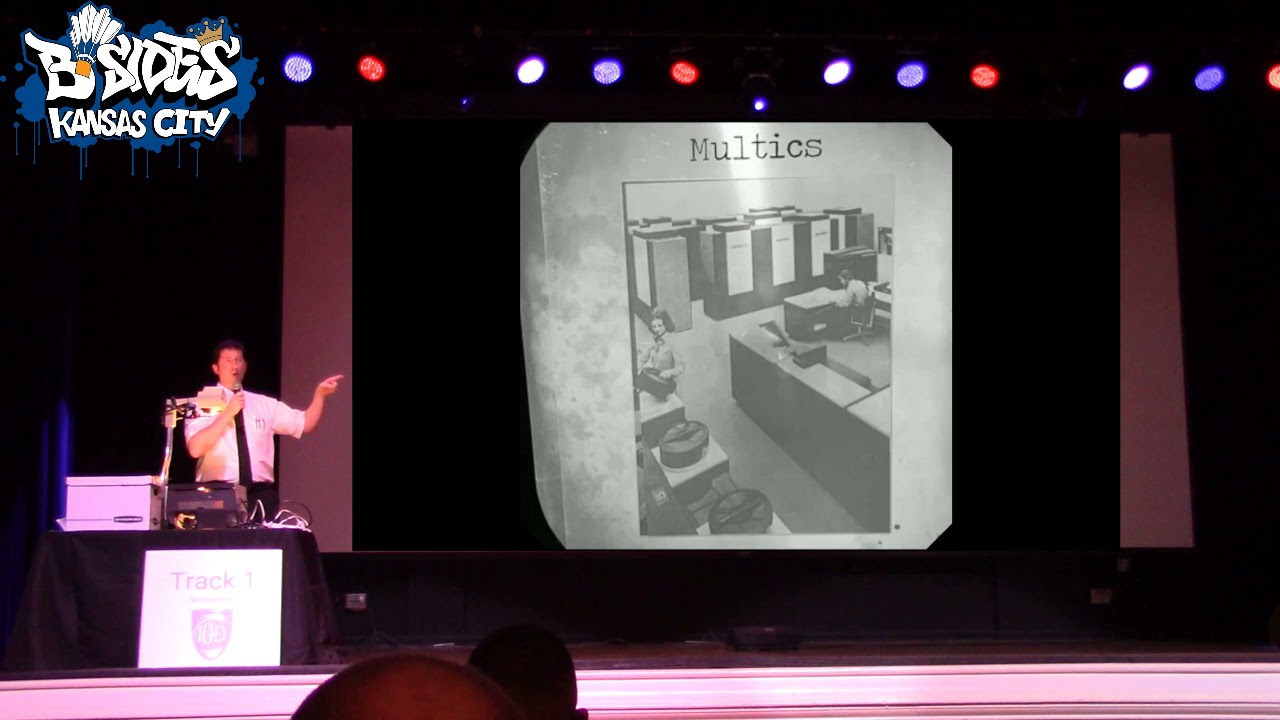
papers and reports um you know what does it look like in practice and that's where where it brings us to multics so multix is of course the operating system in use by uh many agencies within the federal government along with critical businesses and multix is the pinnacle i would argue of the current state of computer security right now so multix was designed from the ground up with security in mind all of the principles and more that i didn't even discuss were incorporated into the politics operating yet moltek still has vulnerabilities and weaknesses recently some programmers at multics uh released a retrospective of sorts on various security bugs that were discovered within multix and subsequently fixed
and they released this so that we can learn from the mistakes that occurred in multic so two interesting bugs that i thought were good to reflect upon was a bug where a malicious user could pass an argument into the operating system and this the value of that argument would overflow the bounds that were expected and that would cause the system to crash another bug that they discovered and fixed was that a malicious program could pass an invalid memory address one that wasn't expected by the system and if you were careful you could pass a memory address to a protected part of memory and your lesser privilege program would execute that code or those functions in the
higher privilege memory now the good thing is is that these bugs have been fixed in multix the other great thing is that we know about these bugs and we've published a retrospective on them and we've all talked about it and understood these classification of say overflow bugs or or these indirect memory address box and so now i would imagine if you think 40 years in the future that we'll have accounted for these types of errors into our programming languages into our future operating systems into our other systems and we won't run into these particular errors instead we'll just encounter new ones that we don't know about today now let's switch gears a bit and talk
about a very uh relevant topic which is that of cryptography so uh for as long as we've been communicating as people there have always been people who want to keep their communication uh secret and conversely there are others who want to break that that secrecy to learn what those individuals are discussing and so the nsa uh is the arbiter of all cryptography research here in the united states all research on cryptography flows through the nsa all of the best researchers in cryptography exist in the nsa because if you're doing cryptography research that is the place to be and the nsa has this interesting dual concern with cryptography and that is that the nsa is tasked with building
very secure ciphers for use within the united states within our military and federal system ciphers that we don't want people to break but they also are in charge of breaking every single cipher that exists including those that also may be in use here in the united states and with the rise of the emergence of networks and we have computers and further digitization of this world where computers want to communicate with another woman to share data with a computer we need to do so in a secure manner and so cryptography has now become a vital part of our industry now the nsa though like i said controls access and influence on all of cryptography and so
one of the recent things that the agency has done is uh this paper that i'm sure some of you uh saw floating around is a paper on the higland cipher machine the m209 model in particular and it's a paper discussing how to break the cipher on that machine the nsa as it does with all cryptography research reviewed it and talked with researchers to suppress that and it never was published now some of you may be asking yourself why would the nsa care about breaking the cypher on this obsolete cypher machine that none of us use anymore no country uses this no military uses this this is an old machine who cares well the nsa realized that the attack
vector that the researchers discovered that attacks this m209 machine also affects other modern ciphers that we use today and of course we can't let that information get out there lest our enemies know that their ciphers are weak and the nsa is able to break them now sometimes the nsa needs some more direct means to influence ciphers and that's when they uh put back doors or trapdoors into the encryption hardware so of course i'm referring to project thesaurus which is where uh the us government along with um our friends in the west german intelligence made an offer to the swiss crypto ag company back in the late 60s and that offer was a secret one in which
we bought out the company and so now the cia and the western intelligence uh secretly run crypto ag and if you're not familiar crypto eg is the maker is the premier maker of every cipher machine used by governments militaries and businesses alike so here we see the h 460 released in 1970 so just nine years ago this was the first cypher machine from crypto ag that was designed solely by the nsa so the nsa did all the cipher design handed it over to crypto ag and they produced it and of course this cipher is meant to be broken by the nsa and only the nsa our agreement with crypto ag is such that when a us customer purchases a
machine from crypto ag they get a version that is a secure cipher and then everybody else gets one that's that's uh insecure so this has been a fantastic success for our intelligence community and this is something that i see lasting for probably at least another 40 years or so before anyone figures this out now cryptography is not just in the realm of hardware um again with the rise of computerization and the rise of networks it's become ever increasingly important to have a cryptographic algorithm or cipher that works in software and so recognizing this need the us government and the nsa proposed that we have a national standard that we can all align to so computer systems can all talk in the
same secure manner and so ibm stepped up to the challenge and modified their interestingly named lucifer cipher to dez or des and the nsa actually jointly worked with uh the ibm cryptographers on the des cipher now the nsa's influence was in three main areas so the first is that the nsa reduced the semester key which is the most important part of this cipher from 64 bits down to 56 bits now that might seem not seem like too much but that's several orders of magnitude reduction and work factor when it comes to attacking this cipher in a brute force manner interestingly the ibm researchers working on this cipher discovered an interesting attack vector that would that des was weak to which is something
that we now know as differential cryptanalysis now the nsa researchers were very surprised by this because they of course have known about this for years and have used it to attack other countries ciphers so the fact that ibm discovered it on their own was a bit concerning but the nsa was able to get ibm to agree for national security reasons to you know suppress all knowledge and research on this particular topic and then related to that um the decipher has this feature called s boxes which is basically like the magic black box that does all of the work in the cipher the nsa designed the s box or actually redesigned it for ibm and they actually made it more secure by
making s boxes the nsa implementation um resilient or more resilient to those differential cryptanalysis attacks and that was done so that when other researchers were examining dentists they wouldn't find that same attack factor because we want to keep that information as secret as possible for as long as possible to help out the nsa now oh i also forgot to mention that you know while this is all going on there's some interesting developments just in the last couple of years so a couple of researchers um going by the names of uh diffie and hellman they just produced a paper on a very interesting and novel concept and this paper the nsa tried to suppress this work but
they they proceeded and in this paper they describe a mechanism how two individuals who have never spoken before never communicated can somehow have a secure communication over an insecure channel and they call this thing public key cryptography which sounds like an oxymoron and flies in the face of everything we've known previously about cryptography but in parallel some other researchers at mit have also released an algorithm on public key cryptography uh just a short time later and they call theirs by their initials of the researchers uh aes rsa that's what it is so um the nsa of course uh is interested in maintaining control over ciphers and algorithms but it's it's going to be interesting to see where things go in
the next 40 years as researchers are bugging the trend and not not towing their line to the nsa so i mentioned that we would talk about networks and so pictured here is a computer scientist and privacy researcher paul armour on the left and willis ware you know the wear report on the right and both of these individuals understood the importance of computer networks and their applications or implications on computer security remember paul armor here on the left because we're going to come back to him at the very end so networks of course are nothing new in fact you could say that one of the the first data networks was when the french created their uh network of semaphore
towers across all of france uh the french built nearly 600 of these towers across the country in the late 1700s early 1800s and this network was used to communicate exclusively by the military and government across their country so communication that would take days by a messenger to travel can now be done in a matter of hours using these semi-4 flags and towers and spotters but it didn't take long for two french bankers to learn how to abuse the network and so they simply bribed an operator of the paris tower and another operator of the bordeaux tower and they had the paris operator secretly signal put a little character in the stream of each day's communications that would indicate
whether the paris stock market was up or down and their co-conspirator in bordeaux would pick up on this message and pass it along to the bankers where they gained on this knowledge that they got in say three hours they would take the rest of the market three days to learn so they will profit from it now we know abuse in networks today so of course the att telephone network um is uh by far the the most prevalent network in the united states and we've got these individuals called that are calling themselves phone freakers building these these uh boxes these blue things that produce tones and frequencies that allow them to make free calls in the network so again here when
network exists you're going to have bad actors doing things on it that they shouldn't be doing so it's no surprise that when uh there was a presidential directive in 65 to establish the coins network or the coins network experiment that is a experiment to link up our intelligence agencies and share data between them this is an example of a network which reached four nodes that was built with security in mind from the start obviously the data that they were sharing is very sensitive and so it's security of the utmost importance but conversely a very popular network or has become very popular is the arpa network so this was conceived around the same time as the
coins network and its stated goal was to link up research institutions to share data and the arca network has been a tremendous success uh the technology that it's built upon is clearly the superior to every other network we've built and it it's been operating for only 10 years now but in the past 10 years it's already grown to nearly 200 nodes which is just astounding but yet security was not a design goal of the opera network and we actually see that in this example program that was written only two years after the operation of arpa network came online where a researcher wrote a program called creeper and creeper would copy itself to other nodes or hosts on
the network and if you logged into a node that was infected with creeper in your teletype terminal you would get this message saying i'm the creeper catch me if you can now another researcher then wrote their own program called reaper and reaper would spread itself through the network cleaning up all the copies of creeper now this is a very innocuous and kind of fun example here but we can all imagine a malicious program or something far more nefarious that would spread throughout our networks and do something more than just print out a message a silly message to the teletech terminal but the good thing is is that we know about this today we've seen this now we
know about this threat and we know that networks are not going away networks are the arpanet in the past 10 years has gone from just you know a few nodes to 200 now it's going to keep increasing so now we have the knowledge to protect ourselves from this as we further build our networks and finally that brings us to today now i had the pleasure of speaking recently with ms nabaldi of mitre corporation and she shared with me a draft of this document that she's going to publish actually next month to this day so october 25th she's going to publish this and she's calling this the proposed technical evaluation criteria for trusted computer systems now i had a chance to skim through the
document and there's a lot of good information here and it seems like that this is going to be a pretty impactful document for our industry so i think it's important that we we grab people's attention with this so i don't know maybe we could you know make the color like bright orange or something like that so it really sticks out but i don't know that's kind of silly um so if we think you know fact that we've only been in this industry for 15 years but we've learned so much in the last 15 years we've learned core principles and concepts that are going to take us for the next 40 plus years we've had lessons learned we've seen
examples of attacks or thought about attacks that could occur and so i'm optimistic that we'll take that knowledge and use it to improve things if we were to imagine ourselves 40 years from now it would be a shame if we got out of that time machine and we took a look around and the situation that we're in doesn't look much different than it does today in 1979 now before i go i want to leave you with something that paul armour remember he was a computer scientist and privacy researcher that i said remember that knew about the growing importance of networks and their effect on computer security and i want to read you something that he
wrote just four years ago in 1975. there will be several microprocessors in every car trucks will probably have one at each end of every axle there will be one in most appliances there will be one pasted on the back of every typewriter i'm sure there are countless uses that we don't even dream of today five or ten years from now most computers will probably be attached to a network or be reachable via a telephone number and most will probably adhere to a standard protocol but by then we should have been wise enough to develop safeguards that will make unwanted penetration from the outside difficult and expensive note that i did not say impossible thank you
[Applause] you
Related talks
 56:48
56:48 27:51
27:51 28:37
28:37 36:09
36:09 1:00:08
 1:00:30