Michael Spaling: Anxiety Society: My Struggle With Mental Health In The Cybersecurity Industry

Show transcript [en]
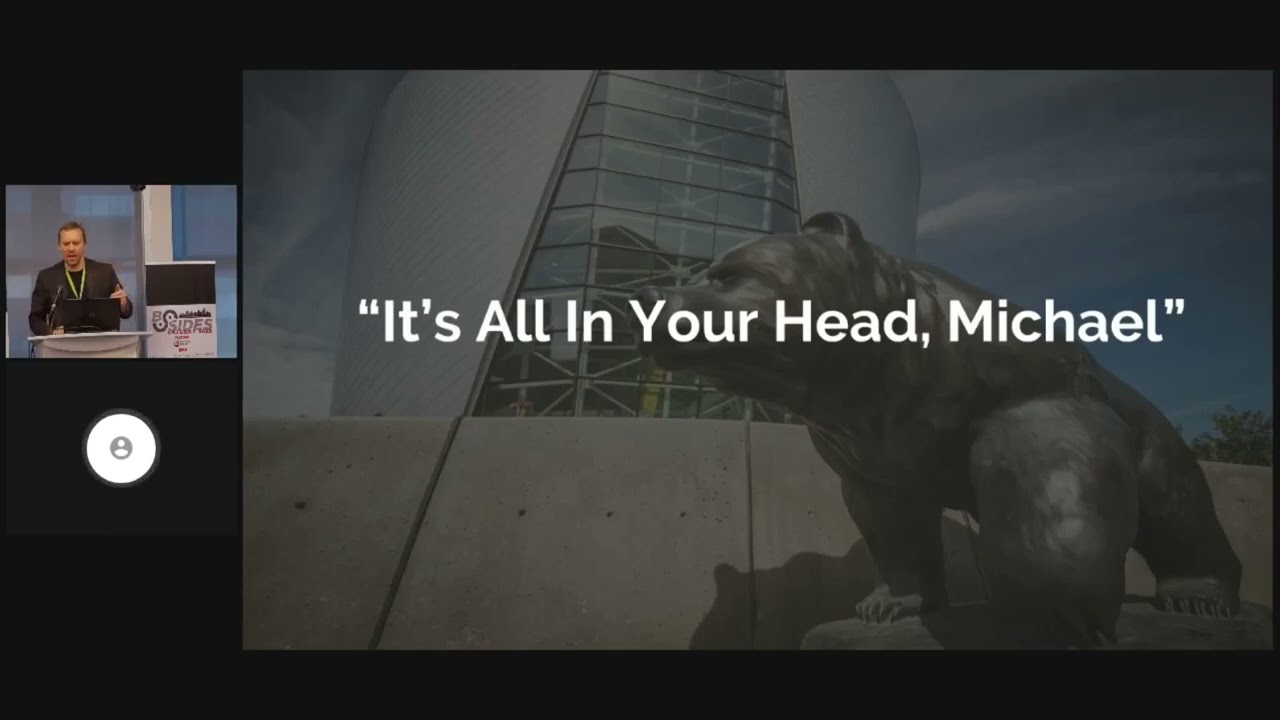
so welcome to anxiety society uh my struggle with mental health in the cyber security industry um i'm gonna try something different today uh most of the talks i've done at security conferences over the years are technical so things like finding and exploiting crypto implementation flaws and anti-malware products to hacking multi-function printer deployments to building large enterprise password sniffers to whatever else is out there that's not going to be today's talk at all uh today's talk is one on on mental health and i want to talk about it from my perspective because i've had severe anxiety for a number of years i'm stressed out 24 7. uh if you're in the security industry you you probably know what that's like
um and and symptoms of occasional uh minor depression in 2018 uh it peaked and i actually went to get professional help through therapy so in the last two years i've learned lots of my colleagues and friends in in the cyber security industry have these same issues so i want to talk about my life what led to a breaking point in 2018 and key things i've learned since then so this is a new topic for me to speak about uh you might like it you might not um but again let's try something different so before we get into this just just one one quick thing um i'm not a therapist i'm not a psychologist i'm not
trained um i'm not a trained professional in in diagnosing or treating mental health but what i am is the same as every one of you and that's just the person going about their life encountering all sorts of stresses and anxieties which is ultimately kind of the great equalizer if you're a human being going about your life you're encountering things that will cause you to be anxious and stressed possibly to a degree where you can't control it anymore um in my case they got bad enough that i was actually skipping social events i was skipping family events i was calling in sick um and in some cases just actually not getting out of bed so your mileage may vary um what worked
for me may not work for you but i still want to talk about it so this is the agenda for the presentation today uh now and then what i learned in moving forward so so now like i feel better now than i ever have in my adult life but it wasn't always this way um i'm learning that many people in our industry are in a mental state right now where i was two years ago and it wasn't any fun um then will be actually a core part of this presentation it's my head state from about two years ago uh everything that i was doing that led to a breaking point but more importantly uh why i was doing those things um then
we're gonna talk about what i learned so the answer to that is is tons um i'm basically summarizing literally uh about a year of therapy um down it's like a 35 minute talk um but but uh it took about a year of therapy to really notice differences so that was the thing was that there is no quick fix right so don't expect a single talk with one person to fix all your problems overnight um i had assumed at first that you can just kind of pop a pill and all your anxiety and stress would go away but that's that's not a thing so i want to highlight the key things i learned through professional therapy that i felt
were important to myself in getting me to where i am now and then moving forward this is more recent learnings that i'll say have allowed me to maintain uh my head state today so this is my intro slide um it will be a bit longer than a typical intro but but that's intentional uh why do i do one introduction when you can do two introductions so i'm to introduce myself right now and then i'm actually going to introduce myself again but from a 2018 perspective and you're going to see some big differences between these two years and then we'll kind of get into the details so if you know who i am you know who i am
um if not just a quick introduction for who i am so my name is michael spalling uh i lead the internal security operations team at the university of alberta so my team does everything from campus-wide firewalls to intrusion prevention systems we cover vpn anti-malware systems we do vulnerability management we do a bit of consulting we do security incident response um kind of the whole nine yards so i lead that team and uh it's my my full-time job i'm also a sessional instructor here at the u of a so i teach an advanced network security um course in something called the mint program so mint stands for master of science and internet working it's a master's degree program offered
jointly between the faculty of science and our faculty of engineering so it takes students from the computing science discipline that students from the electrical and computer engineering discipline throws them together and teaches them i guess like large-scale global communication networks uh such as the internet so i teach a course within that program that's all about the security of data and transit um so and then i'm also on an industry advisory committee for another post-secondary here here in the city so a lot of my core focus on security has really moved to higher education working in the industry as my full-time job i also spend more times with students whether that's teaching with them meeting with them to
learn more about their desires for cyber security careers mentoring some of them in capstone projects and then also advising on course curriculum so that's that's who i am today but uh this was me in in 2018 um i was leading the security team uh i wasn't i wasn't teaching yet but um i was doing a whole lot of different things across a whole lot of different uh different groups um i was leading the security team here uh three geeks talk cyber security um i just uh time out first i can get a tangent if you're looking for a way to talk about security and just get more information out there and be more involved in your community
um look to your local uh pop culture conventions so if where you're from has something like a comic-con equivalent uh they have uh community programming where they look for people in the community to fill out schedules to do presentations and i noticed in recent years that some of those ones in the united states actually have more cyber security panels in them so i ran um or planned and ran a panel at one here at edmonton for a couple years called three geek stock cyber security which is myself a co-worker and usually a friend of ours and we just make our time available at a pop culture convention for an hour just to um yeah make ourselves available to
anybody that uh wanted to talk about security um i was also planning a conference back in 2018 um i was admitting a group called the exec uh if you're from edmonton or even calgary but you've probably heard that name yeg is the edmonton international area it's the area code for the international airport here and it's arguably one of the most active security groups in edmonton it's got hundreds and hundreds of people in it admitting a group like that though involves having to find speakers involves having to find sponsorship and and there's a lot more work that goes into a group like that um someone just spun up something outside my window i think they're they're
blowing all the snow out so positive you can hear that i was on the three advisory committees i mean why do you want me to do three um i was chasing cves i'm actually going to talk about that a little later i was actively speaking or seeking out guest speaking opportunities um i still do that but i rely on people to approach me now and ask um and and i was conference speaking so an interesting thing is uh and i was doing all of this while while being a husband to my wife and a father to my three little kids so the point of this slide is not to say you know hey you might like a dummy
like look at all this stuff you know clearly it was stressful but i want to talk about why and why i decided to take all this on and kind of what was going through my head at the time so speaking of conference talks um i haven't actually spoken at a conference since 2018 so this is my first conference talk since then um i've been spending a lot of my time trying to sort my head out instead of speaking and these issues go back many years but i picked 2018 because it was a breaking point so there's a story that i just want to talk about here um this will be a few minutes to talk
about because it is important because it will set the foundation for this presentation so i was speaking at a conference in burnaby over in british columbia in the summer of uh it was not a security conference but it had a security track and i woke up the morning of my talk just with this feeling that i've never felt before and i'll call it this overwhelming sense of just fear and dread and i just kind of wrote it off as maybe pre-talk jitters which was a little weird because i didn't really get those anymore i actually wake up quite excited uh to speak kind of look at it this morning and i told myself that my talk
is done those those that overwhelming sense of dread it'll just go away um and it didn't actually i finished the talk and and it didn't it was still there um as noticeable as it could be i'd say it actually got a little worse right and i'm kind of starting to worry a bit because i don't really know what to do so i had to catch a plane from edmonton to um or from vancouver to edmonton and i'm i'm driving from burnaby to the vancouver international airport uh with u of a's chief information security officer which is sharing a car he's navigating and like i'm sitting here and i'm i'm kind of not doing too well
like i still felt good enough to drive but i'm telling myself i don't know what's going on there is this overwhelming sense of negative emotions and i was just telling myself maybe it's just the drive maybe i'm in an unfamiliar environment and it'll go away when i get to the airport so spoiler alert it didn't go away i got to the airport and it was still there um got through security it was still there i'm sitting at my gate the plane didn't leave for a few hours and it's still there and now now i'm kind of starting to panic a bit because i'm feeling these feelings i've never felt before just this unexplained sense of fear and
dread um and as luck would have it there was a plane leaving for edmonton um 25 minutes uh in 25 minutes instead of mine in two hours so i actually paid 120 bucks out of pocket uh just to get on that earlier flight so if you've ever flown from vancouver to cal or edmonton or you haven't it's a short flight it's like 90 minutes you do this you do this and you do this about halfway through that flight i had what i now know is is kind of an anxiety attack um i couldn't breathe very well i couldn't think very well that feeling of dread and uncertainty was at its absolute peak i'm literally kind of like rocking in my
chair i'm in my like my mid 30s and i'm almost on the verge of tears like i'm not kidding you i'm like i don't know what's going on i've never felt this before please help but but what do you do you're stuck in an airplane at 30 000 feet or whatever and you know like i could tell it you know maybe a flight attendant but what are they going to do like you know they're just going to wait till we get to edmonton because it's that close so i just kind of sat there and suffered for a while um plane landed get home and as soon as i walked into the backyard at my house everything melted away um
and at that point i had been feeling these weird these feelings for about seven eight hours now um still couldn't explain them just this overwhelming sense of fear and dread and the next morning uh when i woke up they returned immediately and uh that same day i had to take my kids to a soccer tournament um so we ended up going we were there for about 10 minutes um i told my wife i was like i don't know what's going on but i can't be here there's something wrong in my head i can't describe it um so we packed the kids up we went back home they dropped me off they went back to the tournament
uh the next day same thing there was a barbecue in the city um that happens every summer that i wanted to attend got out of my car made it 10 minutes felt this overwhelming sense of stress and anxiety turned around uh came came back to my house so i can't really describe it beyond a sense of maybe unexplained paralysis and and this is when i realized like i needed help um i can't even leave my house without turning around right and in the weeks following i couldn't even get on my car i'd swear off flying um even at work i would just start getting really anxious for no reason normally i would just kind of get up and
go for a walk and that allows me to clear my head and i i do a lot of my best thinking when i'm just walking around campus and those feelings didn't subside so if you've ever experienced this you you know what it's like um if not it's just this massive wave of negative emotions that end up becoming crippling so this is when i decided to get professional help through therapy and and what i would learn in the next year um especially was was amazing so we're going to start with this um just ask yourself for a session how do you define success like what is success uh what does it mean to be successful how
do you define it um i i was having a fun conversation with with a colleague uh around campus we were just chatting and i asked this question like what what is success to you and his answer was this he said michael when i've accomplished what you have i'll be successful and that was a person who kind of knew everything uh from that intro from 2018 slide that i was doing and to them success was you know kind of doing anything and everything and without any filter regard for personal sanity and i remember thinking like like don't use me as an example of success because you know maybe maybe outwardly it appears successful but inwardly i am
not doing well you know i'm a mental net case at this point and i really struggle with that perception but but for me what i learned a bit is that i had set a really high bar for success and was determined to constantly hit it and a key reason i took on so many other responsibilities right is that i had convinced myself that success is defined as a long list of accomplishments and responsibilities that if i'm being honest which i will be i had hoped other people would be impressed by um but but not taking into account its impact on my mental health to get there so the key words there was was i hoped
other people would be impressed by these accomplishments but the real question was was what is what is feeding that why am i so concerned with with accomplishments and the reality is the security industry is full of accomplishments individual team organizational right and i wanted to be right in there with them all right look at these search that i got look at these cves that i got look at these presentations that i've done look at this volunteer work that i'm doing all the above and while working through this with my therapist a key theme started to emerge about our own personal success and a key thing that i learned was that a core reason for my anxieties and my stresses was not
actually the accomplishments themselves but instead it was tied to feedback around those accomplishments so the negative impacts of positive feedback here's a weird juxtaposition positive feedback is supposed to reinforce good behaviors that you want to see continued so how does that become negative right if someone says you know you're great at what you do and and it's someone who is in a position to declare that um what goes through your head right there there are excellent people watching this talk right now who will probably see it in the future who routinely get really good feedback but but how do you process that like do you get cocky did you get arrogant did you kind of let it go to
your head and and for me you know um it is common feedback so i'm not trying to grandstand at all but it's a key reason that made me feel the way i did because to be frank i struggled with believing it um i heard it frequently enough that it was a regular reinforcement and i wanted to maintain that level of credibility with others that that they were telling me i had um and i also didn't believe i was kind of worthy of that feedback but i also liked receiving it thus i just kept raising the bar and taking on more things right i learned the reason for chasing cves planning conferences being on multiple committees seeking
speaking opportunities really was to satisfy the spot i had that without those actions everyone will think i suck and i was worried that if i didn't do them you know people in the security industry will start thinking less of me so i constantly pressured myself to raise the bar so i started talking about this with people that i'm close to professionally and personally in in our industry and actually started learning like this this was not an uncommon um a thing like it wasn't just me uh there were lots of people who were constantly feeling stressed and anxious they were constantly feeling this need to keep raising the bar they were constantly feeling the need to
keep up with the bombardment of accomplishments um all around us so speaking of the bar uh that actually became the next thing that i learned is once i realized the negative impact that this constant positive feedback was having on me i just didn't know how to process it so there was more to uncover so self-doubt um became became a pretty common theme as well and again not trying to grandstand here these are just my genuine thoughts is this is the other side of regular positive feedback was that i didn't feel i was worried or worthy of it to me i was just doing my job and expected others out there to do theirs but when i regularly heard things
like great work you know especially externally from from where i had worked and i really actually started doubting myself and it was such a weird thing because you would have guessed that it would have inflated an ego or something but um but it didn't right instead you know i didn't get cocky or arrogant instead actually got really really anxious and and really filled with self-doubt and this is a question that i started asking myself right is is the work that i do actually being done at a high standard or is the bar that i'm being compared against really low and that that's not a knock to others at all it was just when regularly given
positive feedback and i think i'm just doing my job you know i start wondering like what are people encountering out there um but this is self-doubt right and this is something that i still do do struggle with a bit today but speaking of self-doubt um a really interesting interaction with a friend actually helped reshape some of that self-doubt and this is a major motivation to do this talk because a single conversation with a friend really was was ultimately impactful so i want to tell a story about imposter syndrome um imposter syndrome is the fear of being found out to be a fraud and it is very common in in cyber security whether i'm talking with people
that have been in the industry for 20 years or whether it's it's students that learned about security in a course that they took last semester and really want to learn more um this sense of being found out to be a fraud is is i think very common in security and being in a position of leadership and mentorship i have the privilege of working with people in our industry who have this and helping them through it while also having it a bit myself um you know lots has been written on this topic but i want to tell a story that helped reshape my thoughts about myself related to self-doubt the bar and feedback as it relates to imposter syndrome so a
friend of mine who who wishes to remain anonymous and and you know i'll respect that and i think some of you know this person so if you know this story just please respect their desire to stay anonymous um we were having a conversation about imposter syndrome and i'm telling him that he's the reason i have it right this is a guy who is an expert in his specific field of security he teaches me stuff when he speaks i listen when you post about stuff i pay attention to it um i enjoy his personal perspectives and opinions on things and i pay attention right and this is a guy who is at a level that i will never be at
and i'm telling him this and i said i was like you are the reason that i have imposter syndrome and his reply uh was was the greatest thing ever was completely unexpected he says this is what he says he goes michael you are the reason i have imposter syndrome and i was like what like me you know there's there's that self doubt again right but like i had i put this guy on a pedestal and you know what am i possibly doing that would make him think that you know and and to summarize um basically what he said is he goes you know michael you're a regular speaker you have no problems getting in front of
him with people talking about security which is something that he never felt capable of doing um he also worked alone by himself whereas i'm building and leading teams um you know and there was more to it but the summary is is that he had noticed uh things there were things that he had noticed in me that he thought i was really good at that made him struggle with where he was professionally well at the same time i was doing it to him i was noticing things that i thought he was great at that um really really made me struggle with where i was so just a fascinating discussion is up until that point right i was
self-doubting i was worried i was doing everything i could to maintain this credibility i was so scared of losing and here's the last person i would ever expect to be saying kind of that same thing to me and it really got me thinking so i brought that up with with my therapist and and we talked about it quite a bit but the realization that we need to talk to each other more about our worries and our fears and our doubts and cyber securities really came up so hence why i wanted to do this talk you know i i love the security industry there's lots of stuff on your technical talks ransomware exploit cds products solutions the whole nine yards
but we really need to talk to each other about ourselves and start helping each other out so anxiety stress maybe some minor depression caused primarily by by constant positive feedback not knowing how to process it correctly self-doubt and i mean a desire to sort of maintain this image in the community i built in my head was a disaster for my mental health so i want to switch gears a little bit and i want to talk about um what has really i'll say helped me the most i said at the beginning that i feel better now than i ever have and we talked about my state of mind we talked about how things were impacting me
but i want to talk about key things that reshape my perspective thanks to professional help so again your mileage may vary um i've got literally pages and pages and pages of notes and and interesting tidbits and stuff so it was difficult to condense you know a year and a bit of therapy down into a single presentation so i've got both personal stuff from professional things but this is what really ultimately helped me get out of where i was in 2018 and help me get to where i am today but again your mileage may vary this helped me the first one this was important is i call this the cve slide leisure is what you want to do not what
you need to do so there was a few years in my life where i figured finding vulnerabilities and stuff reporting them and getting cves was something that i told myself i was really interested in and i was but i was spending so much time on it uh that it actually became a chore and it was no longer a hobby um i'd go down a rabbit hole at 10 p.m i'd emerge at 2 am i'd have to work at 7 00 am and i like my sleep i need my sleep and that is not enough time to get sleep um and and the thing though is that i consider that my leisure time right i didn't have to do any of it but
i told myself i needed to do it in order to maintain credibility right in in the industry and then through my therapist we were able to really explore this and this was a key line that she said leisure is what you want to do it's not what you need to do and and it took um i'd say a few months to really kind of transition this but but uh now you know i do what i want to do in my leisure time um whether that's you know playing a video game the way i want to play it anyone that's using the easiest mode because there's no challenge um whether it's going outside of my kids
going for a walk chatting with my wife like leisure time has actually become far less security stuff and far more personal interest stuff um personal interest stuff used to be security related but i would say not anymore now i absolutely believe that to be successful um in the security industry you must be passionate to be successful i believe that interest only gets you so far but passionate people are self-motivated and then they'd spend their own time on it so i'm passionate about security i love the whole concept of it it just fascinates me but be mindful about burnout right don't do what i did right which was spending so much time chasing something that's just gonna cause mental
health problems it's okay to take breaks um it's okay to go on vacation um in fact actually i didn't really realize this until my colleagues would tell me but uh i remember one time saying i'm gonna be on vacation for a week and they're like you vacation like you're not that person that takes vacation um you know stop scrolling through feeds and just just take a break it's okay to put it all away for a while and just do what you want to do not what you need to do speaking of scrolling through feeds um there's here's another i don't i'm hoping people this slide will resonate with people because i think it might be
a little blunt but stop comparing your professional accomplishments to other people's highlight reels um there is an entire presentation in and of itself on on social media and its impact on us uh there's websites out there that promote themselves as professional platforms to build your contacts and skill sets and if your feed is anything like mine um it is filled with accomplishments from others uh many of which are actually people i don't even know or have no relationship to and if i'm being honest uh there's a constant comparison right they can make you feel envy they can make you feel inadequate when you see this this constant barrage of other people's highlight reels right and it promotes an image that everyone
is better than you um everyone is doing more than you everyone is living this life being these security rock stars and and i have to be part of it so i'll absolutely talk about that and say that yeah i feel that way um i had a lunch with with a a friend um who i consider you know quite close with here here in the city who leads the security practice at another very large institution um and and i was surprised to learn that they feel the same way right there's just this constant comparison so i've actively minimized my use of those types of platforms um instead what i've been trying to do and i think this this was spoken in the
keynote a bit this morning was trying to pay attention to the accomplishments of people but those ones who are immediately around me whether that's that's my family or my friends or my colleagues or my team um cheer for the successes right help them become the best they can be um but i've actively tried to to stop being bombarded with all of that at um at scale so here is another slide um we're kind of i've got a few more slides here but uh what is important to you versus where do you actually spend your time um ask someone that first part of the question what is important to you and they'll probably say something like oh my family or my
spouse or my kids you know my parents my faith whatever right but then ask them you know where do you actually spend your time and for me yo social media playing video games watching tv so those aren't bad but in my life there was a big disconnect between what i said was important versus what was actually important to me and i would argue that where i was spending my time is what ultimately decided what was important to me regardless of what i would have told people so i started to reprioritize um my boss kevin likes to use this analogy of juggling um whatever you're juggling some of them are made of glass and some of them are made of rubber and you can
drop the rubber ones and they'll bounce back but if you drop the glass ones they're gone so know what's important and for many years um i had that stuff kind of reversed is in my head i would have treated a lot of the people around me and the relationships as rubber yeah you can you know they'll bounce back but i considered my security expertise and the knowledge around me and the industry to be the glass one right um and and through this this this uh conversation with my boss and through therapy i learned that no it's actually the other way around you know um security will always be here but those relationships and those people
maybe won't so so switch that around so what i started doing is i started looking at something from the perspective of if this was missing from my life would i be sad and i started focusing on this stuff where the answer was a resounding yes so that meant spending more time with my wife with my kids those who are important to me you know such as my colleagues and still being mindful that leisure is what i want to do but reprioritization was key and and spending my team in areas or my time in areas that i would you know miss if they were out of my life it actually started making me happier and i really started appreciating uh
some of the the smaller things in in life so security will always be here it's a full-time job and then some but other things won't so i had to make those things a priority and that's a balancing act but a very good one where my personal time ended up getting rearranged so last one that i got here um moving forward so we're gonna we've got about three or four slides here and then that's the presentation is if you're still watching this um great uh hoping this talk resonated with you or parts of it um if you don't know where to go next i just want to share some of my thoughts which are a bit more recent um some of
this stuff has been brought on by work from home and been brought on by kovid but uh here's the first one is issues can be simple um they don't have to be complex um when i started feeling better after about nine months of of bi-weekly therapy sessions and applying what i was learning um i sat down at one of my sessions and i asked my therapist i said when are we done like like at what point are you gonna say okay michael you're better here's your clean bill of health see ya and the therapist's response to that was she says michael as as long as you want to see me i'll be here um right people sometimes wait until
they hit a breaking point like i did um i waited until i literally couldn't leave my house without this uncontrollable sense of dread washing over me um i waited until yeah i don't want to say it was too late because it wasn't but i wish i started this years ago right but it doesn't have to be that way so don't do what i did um go ask for help it can be simple it doesn't have to be complex uh for me personally you know a lot of these days now um i still see my therapist it's now a monthly thing but now it's what she kind of just calls mental health maintenance right we've addressed a lot of the major
debilitating anxiety issues and move to working through them so there's far less severe challenges on a monthly basis and and she kind of says like think of it as as routine maintenance for your car but instead it's kind of retained maintenance for for your mind so issues can be simple they don't have to be complex and i'll also say that i have encountered this like even with some of um people that i know professionally where they are at a point where i was two years ago they will tell me that and they'll just say it'll get better it'll get better it's okay tomorrow is a new day and you know optimism is one thing but
blind optimism is a whole other thing um go get some help so another one is be mindful of what is personal and what is professional this is definitely more recent and was brought on by covid and work from home so about three months into covid this would have been about may or june now um a lot of the anxiety and stress returned probably as bad as it's ever been since about 2018. um i switched my sessions back to bi-weekly for a couple months just to help me through this and one of the things was a bombardment of distractions right we used to be you know what used to be a physical door you could close and not
get distracted is now gone right everything's virtual now there's countless apps and alerts and tabs going ding ding ding ding every 30 seconds in fact i have my phone in my pocket um i have it on vibrate and i'm ignoring it but it has vibrated uh okay i've got seven eight nine i've got ten missed messages but i'm just ignoring it i'll get to it um which is a key thing is that being reachable 24 7 and being available 24 7 are not the same thing right i can be reached 24 7 via countless different methods but being available is a whole different story right when when kogen started and worked from home started i'd say probably for
you know the five months after that um i made myself available for everyone for everything at all hours of the day and current efforts now are focused on basically setting boundaries and just kind of saying no you know now yes there are uh professional things that i have to do as part of my full-time job with university um but outside of that it's okay to say no right and even as recent as as october of this year i've really begun trying to separate more um personal from physical or sorry personal from professional so that's both physical separation and and a virtual separation um one of the things that my team was chatting about this morning uh is i made a comment
in the the besides calgary chat how i'm actually working from the office today and and that's intentional right for me i've learned it's very important that there'll be a physical separation between what is considered home and personal and what is considered professional and work i actually found it really difficult to have a home office uh it was just hard so both physical and virtual separations what are apps that i use personally what are apps that i use professionally so i've rearranged my office space i've been mindful of what technology i'm using for what um even to the point where how my apps are laid out uh when i open my iphone um the first screen is all my professional apps
the other screen is on my personal app so i've just been building a bit of a separation there um this is the last slide in the presentation so i just want to end with this is be encouraging and build each other up the security industry can be very negative the sky is always falling there is constant noise some people are great at creating problems other people are great at solving them really the challenge is figuring out you know what's actually a solution and what is just noise but amongst all those accomplishments and definitions of success and alerts going off and the general organized chaos that is the security industry if someone said something you loved um
let them know right it builds them up you both feel great so be encouraging build each other up talk about your struggles with the people around you and and help those who need to be helped and we'll all be better for it so that's it that's the presentation um that's a summary of the last few years of my life um i've learned much in the last two years and this presentation is just scratching the surface um again trying something new here uh there was no no content on on you know crypto shenanigans and whatnot that i'm used to presenting on um i have no idea if this made any sense uh i'm just dumping my
thoughts in some some hopefully organized manner here so let me know what you thought uh hopefully it's encourages someone else to speak about their challenges and thank you so we'll open it to q and a and yeah i've i've been ignoring chat sorry so i have no idea if anybody asks questions this is where my uh my twitch streamer comes out and i get a go review any questions i'm just going through here um zoe's harassing kirk yeah sounds great uh that is a lot of pressure by yourself yes lots and lots of pressure um let's see here honestly good points questions questions one more questions questions questions lots of folks would benefit uh yes jason
jason was actually jason miner he says very happy that um that you decided to do the session lots of folks will benefit from the session and thank you for having the courage to face it head-on um one thing i want to mention i actually considered pulling this talk um when besides calgary announced months ago that they were going to be um you know postponing to the point in the future um i was still dealing with some of these issues and and uh jason was actually one of the guys who was like no michael no uh do your presentation you need to do it so so uh thank you for for being there jason uh 100 agree thanks a ton glad thank you
thank you thank you made perfect sense great great presentation any questions anyone anyone great talk cool that was a great value to talk cool type and b cool well um i don't see any questions in chat i've had a few minutes to put them in there so thank you very much uh enjoy the rest of your presentations and the conference
Related talks
 50:00
50:00 49:18
49:18 28:29
28:29 50:09
50:09 40:05
40:05 50:04
50:04