Keynote
Show original YouTube description
Show transcript [en]
before we begin we need to take a keynote selfie so everybody smile
sweet thank you all right I'm excited to be here my name is Aaron toponce I'm a local Utah I live up north in Davis County there was a few accidents on i-15 so was a little nervous I wasn't gonna make it but I'm glad I left in time so we're good I'm gonna talk about crypto and just in case you're confused Kryptos not stand for cryptocurrency it refers to cryptography if there's any doubt come see me afterwards I'd like to share my story how I got into cryptography when I was asked to be the keynote by Bryce Bryce asked can you inspire these local you tongs to maybe get interested in cryptography it's been a long passion and hobby of
mine for years and I thought absolutely so I think the best way to do that is show you how I got into cryptography so I'm just going to tell stories I'm not going to go over industry standards I'm not going to go over best practices I'm just gonna tell a story so I work all right so we need to go back to 1989 I'm 12 years old I'm entering the seventh grade and I am your typical backwards introverted freckled left-footed nerd I was into Dungeons and Dragons solving Rubik's cubes playing video games reading comic books I wasn't in the student body president or whatever I didn't do sports right and my friends and I were just your typical
run-of-the-mill nerds so we like things like today are talking and The Hobbit one of my friends quit wheeler loaned me his copy of the book and I had already been familiar with the Hobbit I'm not sure if you guys have seen that old 70s cartoon movie I think 70s maybe 80s yeah it's awesome it's a good movie so I was familiar with The Hobbit but I hadn't read the book so I read the book and it's a good book a bit academic I think for maybe a seven seventh grader but what stuck me was the map at the front and with most fantasy books there's typically maps about where the characters are going to be moving around
but what struck me was those characters they'll that cryptic message underneath the desolation of smaug I had never seen anything like that before I didn't know what I was looking at what is this right so I go to my two friends and I'm like you guys seen this do you know what this is and my friends like yeah that's actually elvish Tolkien invented his own languages invented elvish and has some writing stuff for it and I'm like that's freaking awesome so how can we learn more so we turn to the internet just by raise of hands how many can tell me what this is about half that's not bad this is what the internet looked like
before the Internet if you wanted to learn something a topic something you wanted to research you either went to the Encyclopedia Britannica that your mom had on your bookshelf or you turn to the card catalog at your local library so this is a card catalog it's a picture of the L's you can see la oh la you so you would look up the last name of the author that you're interested in go to that shelf and it would be filled with index cards in alphabetical order of all the books that these authors had written and so I'm interested in talking I'm interested in elvish I want to learn how to read what's on that map and so I have
to go to the car catalog pull up books on Tolkien find them in you know find the call numbers go out to the shelves and locate it and I learned what the characters meant and this is what it says stand by the grey stone when the Setting Sun will shine upon the keyhole for those familiar with the Hobbit you know this is the point where Bilbo Baggins and the dwarves are at the Lonely Mountain rather than going through the front gates they're kind of taking a back door but they can't find the door so here's this riddle that they're presented with and they need to try and figure out how to get into the mountain and that's that's their hint
so my friends and I wanted to make this our thing so we learned the character for character mapping of what's called Kurth this is the ancient elvish runes that tolking invented for his book we would map the characters the Kurth characters to their English equivalent right so here's a here's B here C and tolking even had some diagrams like EE and th and ng for a specific character notice Q there isn't a representation for Q in elvish and when you think about it the Q we always say says qua but that's really qu Q by itself is just the cuss ound without the U it's not cool so in place of that you'll notice the
characters for Q are actually the characters for K and W but we internalize this we made this our thing we were fluent with it and by the end of seventh grade we could read and write English using curse just as good as we could do it with English characters we didn't need a lookup table any longer so if I wanted to transcribe the quick brown fox jumps over the lazy dog in Kurth that's what it would look like and we could make sense of this we could read it and this is how we passed notes in class and in the locker hall and into cafeteria which means that when we got into eighth grade New Year my German
teacher Craig Jessup err Jessup told us at the beginning of the school year that if he catches us passing notes he'll confiscate the note and then read it in front of class you can see where this is going so my friend and I who were taking the class together got a note confiscated by the teacher we were worried it's written in curse who else reads Kurth the teacher goes up to the blackboard this was before whiteboards it was a chalkboard chalk grabs a piece of chalk and transcribes the curse on the blackboard and then slowly translates it into English I don't remember what the note said but I do remember I was awfully embarrassed I just wanted to hide in my desk right
so it turns out there are more nerds than just myself and my friends so we went back to the drawing board now we were Boy Scouts so we were avid readers of boys Life magazine who subscribed to boys Life magazine who read the articles and boys a few liars in the back of boy's life was the catalogue where you could order stuff and very gimmicky stuff like fake vomit fake dog poop there was a hand buzzer that you could put on your finger and shock the person when you shook their hands there was a book about how to learn how to throw your voice and other whoopee cushions other silly stuff but what we were interested in was this this cipher
disk as you can see it's just two rings of alphabets a static outer ring A through Z and then an inner ring that turned and had a little window that would go to a number between 0 and 25 0 meaning a would line up with a and then 25 meaning that Z would line up with a write so you would turn it to a window like say 7 and you would tell your friend we're using 7 for our super secret messages and then we could encrypt and decrypt each other's messages my friend however was smart enough to recognize that we didn't need to buy this we could just shift our characters by 1 right so in this case we
could turn a into B B into C and so forth and wrap around Z and a and the reason we chose one a simple Caesar shift of one character was because we could do it in our head we didn't need to write it down on paper so th e would become uif right and granted it was slower it was emitted ly slower now writing our notes but that was the mess that was the goal take our note Caesar shift it by 1 then transcribe it into Kurth so now the quick brown fox jumps over the lazy dog become this and you can see it that first let that first word tha th e T goes to you H
goes to I he goes to death right the quick brown fox jumps over the lazy dog transcribed into Kurth there it is and if you don't believe me here they are side-by-side plain text at the top and then Caesar shifted by one and transcribed into cur at the bottom we figured that this was indecipherable like no one is going to be able to break our secret code fortunately we never had notes confiscated by teachers anymore least not that I'm aware of unfortunately however Christmas of 1991 that's Christmas by the way Caesar shifted by one Christmas of 1991 I moved out with my dad my parents divorced when I was 8 or 9 and tensions were building
up between me and my stepfather and my step siblings and the plan was after ninth grade I would move out and start at a new high school but things kind of boiled over a bit early and so Christmas halfway through ninth grade it moved out and so this is what I'm sure my boxes look like as I was moving but the sad thing is I never saw those two friends again and when I went to high school to show my new high school buddies the super-secret encryption method that we had with elvish like they would entertain me yeah that's cool good job and then move on with life so I didn't really have that same synergy with the
new high school buddies that I had with my old friends but that's okay because August of 1999 I married my wife which means this august of nineteen or not this august 2019 we will celebrate our 20th wedding anniversary [Applause] and she and my daughter are sitting right over there so make sure to congratulate them embarrass her a little bit afterwards but I share this because I don't know if any of you have been able to share something special with someone special but a few years ago I created a Twitter account called cypher monkey and my goal was to create visionary encrypted puzzles post them to Twitter and then you could solve them and I had four
difficulties easy medium hard and extreme and easy I just gave you the key directly all you had to do was pull up the Visionaire table and do a direct decryption medium I gave you part of the key hard I only gave you the key length and then the extreme I didn't give you any hints about the key you're on your own okay well my wife decided to take it on herself to learn the Visionaire cipher and for Valentine's Day one year she wrote me visionary encrypted Valentine's and she cut these out on little construction pieces of paper and scattered them through the house for me to find kind of like as a scavenger hunt so even though I don't have my two
friends where I can do Caesar shifted elvish I have a wife that's willing to write me visionary encrypted Valentine's so I think that's pretty cool all right moving forward 2002 I stumble upon a book called silent years an autobiography by jf burn it's interesting because Jeff Burton was actually friends with James Joyce and he shares some memories with James Joyce for those of you who are book nerds this is James Joyce of Finnegan's Wake that James Joyce the author James Joyce right so it's kind of cool that jf Byrne has this connection his timeline is interesting he was born in Dublin Ireland in 1880 in 1910 at 30 years old he emigrated to the United States lands
in New York City and then in 1918 he invents his own hand cipher called the KO cipher kind of a mix of chaos and cipher and he firmly believed that this was 100% indecipherable this was a truly unbreakable cipher and he believed it so much that after World War one ended he began taking it to the government he went to the War Department which William F Freedman the cryptographer Weymouth Friedman was employed and William F Friedman says I don't have them I don't have a problem analyzing your cipher for you but I need the following things I need you to take these plaintext and encrypt them I need the key and I need the algorithm basically I need the whole
thing and jf Byrne was a bit paranoid that the government would steal his invention right he invented the KO cipher this is his baby he didn't want to reveal his hand to the government so he went ahead and gave them the cipher texts but didn't give them the algorithm and William F Friedman who invented the index of coincidence this is a way to identify how coincidental ciphertext is behaving like natural spoken English right so when you're looking for things like frequency analysis kind of diagram pairs and trigram pairs and there's other other things that we can look at in the index of coincidence well supposedly as the story goes William F Friedman noticed that it was weak with the index
of coincidence on the ciphertext and that was the reason that he declined jf Byrnes proposal to implement the Kayle cipher in the War Department undaunted though Jeff burns tries the Signal Corps he tries the Navy he tries going to private organizations supposedly he even went to the Roman Catholic Church but in every way he's forted no one's interested in taking up the algorithm or the cipher because he's not willing to share the algorithm he thinks that the ciphertext should stand on its own they should buy it out of faith first he should get his financial war then he'll reveal the algorithm this is where the silent ears comes in in 1953 he publishes his autobiography and it's
an autobiography if you don't if you're not a family member or if you don't know the guy you're probably not going to be interested because it is your standard autobiography but what's interesting is at the very end of the autobiography he introduces the world to his invention to the Cale cipher and he has a series of what he calls exhibits six exhibits at the back of the book we'll look at one here in a sec that our cipher texts encrypted or plaintext encrypted with the Cale cipher and he offered a $5,000 reward if anybody could break these cipher texts or if anyone could discover the algorithm in 1960 and 80 years old he passes and no one had really taken it
up mostly because no one knows who the guy is and no one's really familiar with his autobiography but David Kahn the historian journalist and author publishes his first book called the code breakers this book is the definitive authority on the history of cryptography and it took off it really became successful seller well he mentions the Cale cipher in his book now the public is interested now the public would like to know where is the sign that years where were these exhibits I want to try my hand at 5,000 bucks not knowing that jf Byrne has passed the American cryptogram Association of which I'm a member the ACA even gives an attempt these guys are a
bunch of people who enjoy cracking cryptographic puzzles just for the fun of the challenge right just cracking them for the sheer fun of cracking puzzles they were thwarted they couldn't crack it it couldn't figure it out and John Jr jf Burns Sun finally publishes in the cryptographic museum crippled ogia he shows the algorithm to two editors and with the joint authorship they write an article in crypto gia that describes without giving away the algorithm kind of describes the Cale cipher how it behaves and why you should be interested but just like his father he's keeping those cards close to his chest he does not want to just hand out the algorithm willy-nilly for free to the public
Moshe Reuben is the lead cryptanalysis of the kale cipher and after reading the codebreakers in 2008 he decides to give it a shot so he and a few of his cryptographer friends and some mathematicians start going after it it's interesting coincidentally that year John Byrne jr. passes and that's significant here in a second but this is what one of the six exhibits looks like ok this is a scan out of the back of of the page silent or back of the book silent years that very top line is the plaintext all good quick brown fox --is jump over lazy dog to save their party and then there are 24 cipher texts and following right so it's encrypted 24
times with the Cale cipher and here's 5,000 bucks if you can discover the key and the algorithm that pulled off that that encryption and there's 6 of these guys well in 2010 the Cale cipher was revealed when John passed away in 2008 his widow Patricia decided that maybe the world at large should know the Cale cipher so she donated all of jf Byrnes kale cipher work to the National cryptographic Museum in Fort Meade Maryland in 2010 and it was that donation that now revealed the algorithm and this was how the algorithm works it's 2 wheels that are physically connected together kind of like a 1 to 1 gear ratio so when you turn one wheel
the other turns with it you had a plaintext wheel which was typically the right wheel in a ciphertext wheel which was the left both wheels had the full alphabet A through Z 26 characters and the operation was that you when encrypting you would turn the plaintext wheel and move your plaintext character to the zenith of that wheel in geometry the zenith typically refers to the top of a circle and then the nadir refers to the bottom of the circle hundred eighty degrees around a circumference so you would move your plaintext character to the zenith but that was rotating the ciphertext wheel as well and that would move a character into its zenith in this case H if I was
encrypting P I would write down H as my cipher text character then I would modify both alphabets but differently I'd modify their write wheel and then I would do a similar but different modification to the left wheel and the point of that is when I come back to P again I don't always want it to encrypt to H it should change right in fact all of the cipher text characters should have an equal opportunity of being available as a cipher text character when I try to encrypt the plaintext P so that's the point of the modifications of the right and left wheels and why they differ subtly so we can ensure that we're getting that one out of 26 chance
for the cipher text characters when we're doing our encryption so that's the theory this was what was donated this is a prototype I don't know if this is John's or his father's jf burns but you can see these are like cardboard wheels I think there are some brass Brad's stuck around the edges to kind of act as teeth for a gear and I don't know fills or leather or if they're wooden tiles that are written on but you can see it's kind of clunky kind of awkward can you see the Navy using this like it's just kind of weird right it's remarkable in theory but in practice it has some interesting engineering challenges I was actually for a time semi
interested in starting a Kickstarter campaign where I could do cypher rings and each ring would have a plaintext and ciphertext wheel on the ring but rather than going around side by side you would bring them together you know I can arrange so it's not fat with little individual tiles but it's it just purple it just creates some really weird engineering challenges it just doesn't work out as elegantly as you would like in 2012 Patricia Byrne John's Widow passes I think this is interesting because she donated that material to the National cryptographic Museum in 2010 two years later she passes away where would the Cale cipher be had she not donated that to the cryptographic museum would her
kids have done it or what they have maybe kept those cards close to the chest now we're not ready to the Bulger yet let's still try and sell it or what they've just tossed it out with the bathwater this is grandpa stuff let's just get rid of it right so I'm really grateful that Patricia Byrne was able to make that donation but this is also an interesting year because this is the year I got hired of exhibition and rather than taking rather than driving to work I decided I was going to start taking public transit and that would free up 45 minutes of my time one way or an hour and a half per day where
I could just do something rather than drive right and so I decided to read and I picked up Crypton nomicon by Neal Stephenson now I'm just curious who's read this book got a few if there's any book in here that I recommend it's this one this book is fantastic it's hilarious it's romantic it's intense it's got a great pace absolutely highly recommend this book and if you are at all interested in cryptography even in the slightest little bit this book is amazing I'm just telling you and it's not overly mathematical it's not overly technical it's a great easy fun read highly highly highly recommended but crypto nomicon is two timelines told in parallel there's a world war two
timeline and a modern-day timeline in the world war two timeline there's character named Enoch root who is a world war two prisoner of war another character Laurence Waterhouse also becomes a prisoner of war and Lawrence and Enoch become friends in prison and Enoch decides to share his own personal hand cipher with Lawrence that was based on a deck of playing cards and he called it in the book Pontifex now when I had read this I was kind of intrigued because by this point not that I am a cryptographic historian or expert by any means but I think I would have run across an algorithm using a deck of playing cards before this was kind of new to me so I decided to look
into it Neal Stephenson when he was writing this book approached real world cryptographer Bruce Schneier and said here's a deal I'm writing a book I want an algorithm that I can call my own that's unique for the book the world has never seen before it's got to be a hand cipher but it would be great if you could also make it secure for the modern day as well right can you pull that off so Bruce Schneier is like yeah I'll give it a shot so being a hand cipher he's thinking I'm just going to encrypt the characters A through Z keep it simple what could I use and he recognizes that a deck of playing cards has 52 cards in
the deck this is exactly twice 26 and if you're cryptographically inclined we like inventing or working with primitives that don't carry inherent biases because 52 is a multiple of 26 then that means that all my characters a through Z should be if I design the algorithm correctly should be equally likely I'm not dealing with an inherent bias like some playing cards only have 48 cards in the deck well in that case I would have 22 letters in the alphabet that have a chance of coming up more often than the other four does that make sense so we like having things that work in multiples so he created this around a deck of playing cards and he called it
solitaire so here's how the solitaire cipher or Pontifex in the book works you take every character in the English alphabet and give it a numerical assignment so we'll just do 1 through 26 for a through Z but we also need to give numerical assignments to every card in the deck as well Bruce Schneier to follow the bridge ordering of suits it's essentially just alphabetical order so clubs comes first then diamonds then hearts than spades so clubs are those spades are high in each suit the ACE is one then you have two through ten Jack is 11 queen is 12 King is 13 so the clubs are just their face value 1 through 13 the diamonds are
the face value plus their team so you get 14 through 26 the hearts of the face value plus 26 that gets you 27 to 30 9 and then the spades are the face value plus 39 that gives you 40 through 52 there are also two distinct jokers as part of the algorithm and they have a value of 53 but they're not used for in ciphering you're deciphering characters they're used as pointers jer software developer especially in C you're probably familiar with pointers the Joker's are behaving in a similar fashion so I want to encrypt do not use pc10 characters so I'm going to take the numerical assignment of each character D is 4 oh is 15 so on and then I'm going
to work the algorithm solitaire is what we call an output feedback mode stream cipher basically it's just a pseudo random number generator ok as I execute it it spits out random numbers so I know I have 10 characters to encrypt so I'm gonna work the algorithm ten times and I'm going to get ten pseudo-random numbers in this case 92117 forty nine ten so forth all those numbers on the second line are my my pseudo-random numbers and then I'm just gonna add those to the plaintext characters so 4 plus 9 is 13 15 plus 21 is 36 so forth I want to get them back to a through Z on my cipher text though I only have 26
characters to work with so what happens when the value is bigger than 26 that's where my modulus function comes in so I'm basically doing addition modulo 26 there's two ways you can think about this if the number is larger than 26 keep subtracting 26 off of it until it falls within the range of 1 to 26 or divide that number by 26 and returned the remainder right so 36 for example 26 was into 36 once with a remainder of 10 so the output is 10 so at the bottom there now I've got my characters that are within my range of 1 through 26 I convert those back into their alphabetic equivalents and I get MJ eld om dqf as
my ciphertext and to decrypt it's just the reverse convert those to their numbers work the algorithm I'll get the same key stream I'll get the same random numbers 92117 provided I executed exactly the same way that the person who sent me the ciphertext executed it but rather than doing addition I'll do subtraction modulo 26 which means negative numbers are possible so in that case I would just add 26 to bring it up into the positive range of 1 to 26 to return my plaintext characters it makes sense that's how the operation of the algorithm works at a high level I'm not going to go over the individual steps algorithm themselves if you want to talk
about it I brought a deck of playing cards I brought two decks just because all right well let's see yes right there ah there we go I became so attached to this that I kind of became a little obsessed and I think my wife will probably not and say yes you were I was encrypting messages at dinner I was taking a deck of playing cards to my daughter's soccer game I even took him to church playing cards in church I was encrypting him verses and Bible verses I was taking it to work I was taking it on the train like if you know me as a personality this isn't surprising but I know the few who do know me are just
like how brother here he goes again right I kind of just become attached I really just jump on things wholeheartedly and we went to target once and I'm like I don't like paper based playing cards because the the oils for my hands gum up the cards and then it makes it difficult to execute the algorithm so I got we were at Target and I these bicycle prestige playing cards which are plastic based playing cards and if you haven't played with plastic playing cards like in Texas Hold'em you know when you have a card night with your friends you should try it they're a dream they shuffle so cleanly they deal so well they they're just
going back to papers painful it's really really painful but I bought two decks just in case I come across that one guy who wants to encrypt with the solitaire cipher I still have them with me I haven't met that person yet but now I'm curious are there other playing card ciphers out there have other people design stuff like this is the first I've heard of it this is the first I've seen there's got to be more so I did some searches and decided to create a centralized repository of playing card ciphers and I recorded videos I wrote Python scripts so you could execute it in software rather than hardware and I've been working on analyzing their
security analyzing the cryptographic strength these decent or these just stupid toy ciphers and what's interesting is you could boil them down to three categories there's dynamic substitution which is dependant on the message the message drives the state changes of the deck of cards there's the output feedback mode like solitaire where operates independently of the message and then we have a couple other designs deck uses linear feedback shift registers Claddagh block uses double Colin or transposition with the straddling checkerboard that's a mouthful for you but notice on there there's two I want to point out so there's solitaire you see that and the output feedback mode column but Kayle cipher wait a minute that's not a
playing card cipher those are mechanical physical wheels right well there are two wheels there of 26 characters each that's 52 characters there's only two colors in the deck red and black so I have 26 black cards I could use for my plaintext wheel and 26 red cards I could use for my ciphertext wheel I now have a workable elegant bare metal solution of the kale cipher with the deck of playing cards and actually reached out to Moshe Reuben that cryptanalyst that cryptographer i mentioned earlier i said hey check this out what do you think and he liked it so much that he published an article encrypt loggia and mentioned my youtube video and my playing card ciphers and i
got a few emails from like scary real-world cryptographers saying can you tell me more about this yeah i guess right that's kind of cool like kind of putting my name on the map a little bit in the footnotes but that was fun but I also had to try my own attempt so in the output feedback mode column at the very bottom you'll see Talon this is my design where I try a output feedback mode approach to encrypting with the deck of playing cards it turns out it has an interesting weakness and so I'm back to the drawing board redesigning it and Talon to will maybe come out later this year this is kind of fun
10 designs 10 playing card ciphers all radically different from each other all with decent levels of security so here is how I assigned the kale cipher I need black and red characters or black and red cards for every character in the deck or every character in the alphabet right I can talk tsoay through em I'll assign hearts and spades red and black and then n through Z clubs and diamonds so the plaintext you for example would be the eight of clubs and the ciphertext K for example would be the Jack of Hearts right let make sense so I can now encrypt kale cipher with a deck of playing cards and someone else could decrypt it with the
wheels and vice versa it's totally compatible with that approach so now we have to take it further okay playing card ciphers are interesting from a symmetric perspective from a secret key perspective where both you and the recipient are sharing the same key but what happens if that key is leaked what if someone else gets a copy of it then they can intercept the messages and read them without me knowing without us knowing so I started asking questions I went to the American cryptogram Association conference last year where I presented on playing card ciphers but then I started asking some questions can I do asymmetric public and private key cryptography by hand so I'm looking into that and some of you who
are familiar with RSA are probably thinking yeah you can do RSA by hand yeah but I want to see if I can have a practical approach with legitimate security margins the problem with RSA is I have to deal with very large prime numbers and it's just not practical to do by hand most calculators have 12 digit or maybe 14 or 15 digit precision and I'm dealing with Prime's that are a hundred 150 digits in length so this just isn't practical from that standpoint so RSA doesn't fit but maybe lattices which are n dimensional matrices or Latin squares there are a few problems are np-complete that would make good candidates for asymmetric designs symmetric security secret key
security we saw that with playing card ciphers you can also do cryptography with calculators just a straight scientific calculator key derivation functions can I take a password and turn it into a 200 character key to encrypt my 200 character message all right so there's a few approaches there I've spent some time thinking about that secret sharing is dividing up a secret key in ways say I've got three people divide the key into three pieces and no person can decrypt the message unless all three pieces are brought together to pull it off right so two of the three aren't good enough one of three is not good enough you need all three pieces to reconstruct the key and decrypt the
message integrity and authentication this is where I spent the most time and I've got quite a bit here and I'm kind of hoping there's a cryptographer in Europe that I've been chatting with which I'm hoping can turn this into a paper for crippled ogia that would be fun to publish officially publish a paper that would be like my first step into the real world but lots of these hand designs don't offer message integrity which means that if I happen to have a crib or a part of the plain text that I and I know where it goes at the beginning of the end I can discover that piece of the key and then encrypt something else with that key and the
recipient would not be the wiser like the one-time pad we say the one-time pad is the only unbreakable informational theoretical security cipher out there truly unbreakable sure but if an adversary has a crib of the message then they can use that crib to discover the key and use that key to encrypt something else so you could say rendezvous at 3 p.m. and he could chop that out and put in drop 3000 dollars at the rendezvous point or something analogous and the person decrypting it would not be the wiser would have no idea that the message was manipulated so that's the whole point of message integrity and authentication is to provide those assurances random number generation we
see this with coins and dice you may not be aware of it but your coins and dice are slightly biased right even subtly so this I actually do have a paper here and that same cryptographer wants this to get published so maybe you'll see this one first but removing bias out of dice by hand so you roll a die you get 1 through 6 you roll it a few more times run through an algorithm to extract any bias the die may have and you're left with true random fully unpredictable white random noise you can do this by hand it's not cumbersome it's actually quite interesting or a coin flip you can only get one of two possibilities out of
coin flip right wrong you can get eight possibilities out of a single coin flip eight unbiased uniform possibilities out of a standard u.s. quarter right so kind of fun we can get more data out of our random numbers with classical devices all right why though I mean honestly right we have open ssl we have tor we have PGP we have Lib sodium we've got all of these modern I mean we have computers for crying out loud this isn't the Dark Ages I can encrypt very securely with decent amounts of assurances that no one's gonna be able to read my message without even have to worry about all that garbage well first off it's fun let's be honest
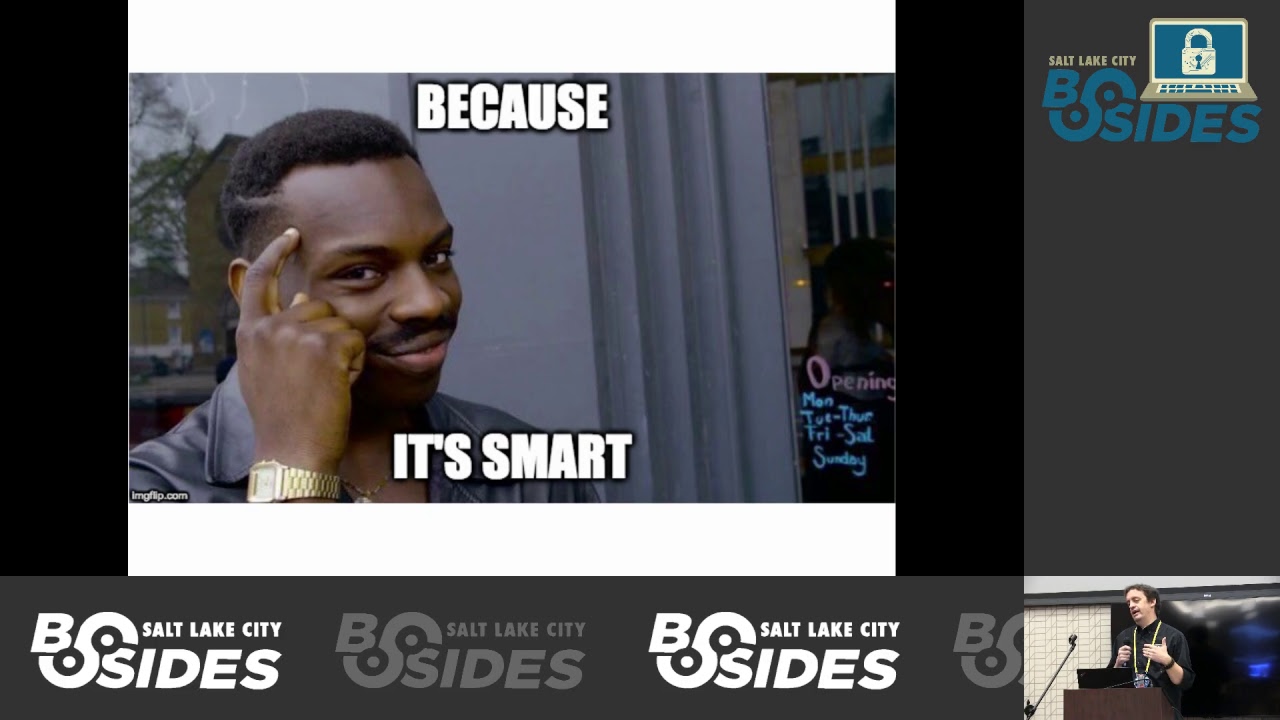
some of you are jealous that your spouse didn't write visionary encrypted Valentine's for you this past Valentine's right it's fun it really is fun even if you're just doing it for the entertainment purposes and not for real secret messages the the learning of it is fun but further it's smart here you get to learn aspects of cryptography at an easy-to-understand level you don't want to jump in to AES or cha-cha 20 and start talking about fields and groups when you haven't even studied the math like it's just going to go over your head I have no idea what's going on I'll just trust you right but if you start with the basics first like learning your addition your alphabet and
you work your way up then you can start thinking huh I'm adding message integrity here is there an equivalent in modern cryptography I noticed a bias here can I detect biases here right all of a sudden we start thinking I wonder how this works in the real world so even though you're playing in a a toy area so to speak there are real-world applications that will make you smarter thank you [Applause] you [Applause]
Related talks
 36:54
36:54 28:19
28:19 24:10
24:10 50:16
50:16 21:29
21:29 47:10
47:10